





Types of blasting in construction
There are essentially two types of blasting:
Abrasive blasting
- Sandblasting: Uses compressed air to propel abrasive particles, often sand, to clean or etch a surface.
- Bead blasting: Uses small glass beads to impact a surface, creating a matte, satin finish.
- Wheel blasting (or centrifugal blasting): Uses a wheel with centrifugal force to propel media like steel shot or grit, often used for heavy-duty applications.
- Wet blasting: Uses water mixed with an abrasive to reduce dust, cool the surface, and provide a finer finish.
- Vacuum blasting (or dustless blasting): Combines blasting with a vacuum to capture the abrasive and debris, which can also be recycled.
- Soda blasting: Uses sodium bicarbonate as a soft blasting agent, suitable for cleaning delicate surfaces.
- Micro-abrasive blasting: Uses a fine stream of abrasive through a very small nozzle, ideal for precision work on small parts.
Non-abrasive blasting
- Dry ice blasting: Uses high-pressure air to propel dry-ice pellets, which clean surfaces without leaving any residue.
- Hydro blasting (high-pressure water jetting): Uses high-pressure water to strip paint, chemicals, or buildup, rather than abrasives.
Abrasive blasting techniques differ by the propulsion method (e.g., air-powered sandblasting vs. centrifugal wheel blasting) and the media used (e.g., sand, glass beads, soda). Other types are categorised by their environment or properties, such as dry blasting, wet blasting, and vacuum blasting.
[edit] Related articles on Designing Buildings
Featured articles and news

We're expanding our collaborative mission by launching DB Intelligence, an exclusive market research advisory panel. Built environment professionals can now get paid to share their expertise on industry trends, products and services.
Panel members receive direct financial incentives for participating in research projects like short surveys, 1-2-1 interviews and focus groups. Register today to shape the future of the construction sector.
Social media ban consultation comes to close

CIOB urges UK Government to consider social media’s role in careers guidance in ban debate.
The latest of eight Skills England apprenticeship units

The addition of battery manufacturing welcomed by ECA with a warning about the risks of fast-tracked apprenticeship units.
Building Control Independent Panel final report
A precis of a key report led by Dame Hackitt with full recommendations and link to the government response.
Guide to ISO 19650 for Architecture Firms (2026)
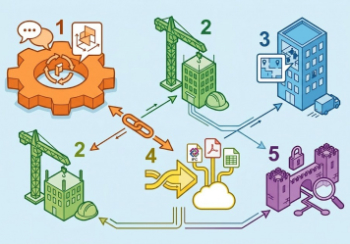
A user gives their low down.

A UK training and membership provider for mould remediation professionals.
Building Safety recap April, 2026
A short and longer run-through of the month, with links to further information and sources.

CIAT May 2026 briefing.

Independent NSI and BAFE study exploring how organisations are changing the way they buy fire safety services.
From medieval scribes to modern word art.

ECA welcomes crackdown on late payment and push for clean energy, whilst CIOB seek fixed cladding removal timeframes.
Cyber Security in the Built Environment
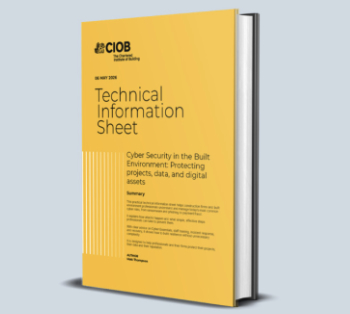
Protecting projects, data, and digital assets: A CIOB Academy TIS.
Managing competence in the built environment
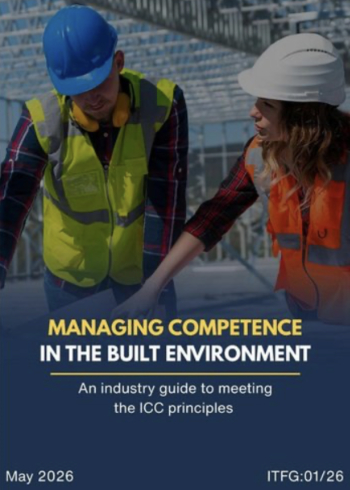
ITFG publishes new industry guide on how to meet the ICC principles.
The UK's campaign to reduce noise pollution: Mythbusting, articles and topic guides.