





Worktop

Contents |
[edit] What are worktops?
A worktop is a flat, durable, hard and often heat resistant surface, generally installed at around waist height and used for preparatory activities such as in a kitchen. The term is most commonly used in British English. The terms benchtop, counter top or counter are used to describe worktops in the US, Canada and New Zealand, though in British English these often refer to surfaces used in relation to manufacturing, processing, sales or service industries.
The British Standard surface height for a worktop is 900mm, and in a kitchen it normally sits on kitchen units, often with an inset sink or cooking hob. The depth of worktops may be around 600 mm but this can vary significantly depending on the material used.
[edit] What are common types of worktops?
There are many different materials used for worktops, but in general the material should be flat, strong and hard-wearing, some examples of worktop materials are described below.
[edit] Solid wood worktops
Many traditional worktops would have been made from wood, often oak or walnut as these grow in the UK and are hard-wearing. These maybe laid as single butt jointed planks because the depth of a worktop is generally wider than the girth of a tree. Today these may be glue laminated to form full width ready made solid wooden worktops, often with a hard wearing finish. Other popular woods used might be beech, maple and iroko.
[edit] Laminate worktops
Many kitchen worktops produced over the last 20 years are laminates. These are worktops that are primarily made from smaller timbers glued to form sheets such as chipboard or medium density fibreboards (MDF) that are then finished with a hard-wearing laminate.
[edit] Glass worktops
As a worktop material the advantages of glass are that is can be cleaned easily, and made in full width sheets that are resistant to heat. Modern glass methods allow for more durable and thicker glass, also in some cases using glass that has been recycled.
[edit] Composites worktops
There are now a great variety of what might be called composite worktops. These might be made up of reconstituted stone, stone aggregates or minerals such as quartz, combined or bonded together with resins or different polymers to create a single homogenous full length and width material .
[edit] Granite worktops
Granite is a relatively abundant igneous rock which is composed mostly of quartz, alkali feldspar, and plagioclase that can be sourced and cut into full width sheets to create solid granite worktops. It is also used as an additive component to composite worktops.
[edit] Quartz worktops
Quartz is a relatively abundant mineral, though not available as sections large enough for worktops, and it is normally combined with resins or binders and so could also be referred to as a composite depending on percentages.
[edit] Ceramic worktops
There are generally two types of ceramic worktops. The first might effectively refer to composite worktops with a variety of minerals, exposed to heat to create a sold ceramic worktop. The scond is simply a tiled ceramic worktop.
[edit] Concrete worktops
Although concrete worktops are not as common, the material is suitable because of its durability and ability to be formed in any size. As a material sitting between a ceramic and a composite, it can vary in its appearance by the mix used, the exposure of the aggregate and how it is is cast, polished, finished and treated.
[edit] Metal worktops
Stainless steel is possibly the most common metallic material for a worktop because of its durability and resistance to rust, though aluminium, although somewhat less durable as a metal is also used. Other metals that might be used for worktops include copper, bronze, brass, zinc and pewter.
[edit] Plastic worktops
Although pure plastic worktops are generally not as resistant to heat as many other materials, they are used. In particular recycled plastic worktops are used because full width sheets can be made from a variety of plastics that might otherwise be difficult to recycle.
[edit] Related articles in Designing Buildings
Featured articles
Check out some of the best features and news from Designing Buildings as well as key stories from around the web.
Undervaluing our industrial past

Heritage value changes as taste for building styles changes.
Changing expectations around competence and compliance

New information sheet from CIAT.
Grenfell investigation files passed to CPS

Angela Rayner apologises on behalf of the British state.

Electrical contractors need to understand the practical implications.

The real barrier to getting more value from digital technology.

Your guide to The Construction Reset at UKCW Birmingham.

Accommodating the Victorian and Edwardian working woman. Book review.
Rethinking passive fire protection in design

PFP demands the same level of design rigour as structure or services.

38% of Gen Zs feel safe when a fire door is wedged open.
Stunning images from around the world
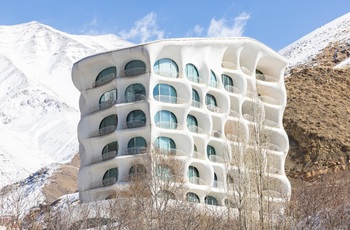
Shortlist for CIOB’s Art of Building photography competition.
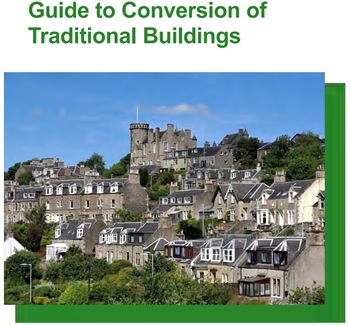
Guidance for conversion of traditional pre-1919 stone buildings.
Industrial heritage in the Ruhr
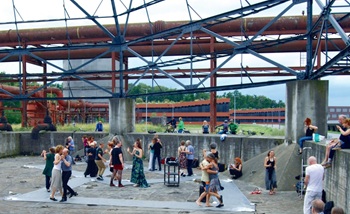
A marked difference to the fate of industrial landscapes in the UK.
Comments
[edit] To make a comment about this article, or to suggest changes, click 'Add a comment' above. Separate your comments from any existing comments by inserting a horizontal line.