





State of the construction industry in Uganda
Contents |
Introduction
Uganda is a low income developing country located in Sub-Saharan Africa, with a population of 36.35 million, a GDP of US$19.88 Billion growing at a rate of 3.4%, against an inflation of 14% (World Bank, 2003). With a GNI per capita based on the Atlas method of US$440, Uganda remains a very poor country and far from the middle income status it aspires to achieve in one generation, and in order to achieve higher development outcomes, the transformation of its economy will be hinged on how the country manages its resources, in particular the fast-growing and youthful population, as well as the recently discovered oil (ibid). The construction industry contributes over 12% of Uganda’s gross domestic product (GDP) and has witnessed steady growth for the last 20 years and despite the recent upsurge in inflation, the sector has remained on a steady path of growth and development (Uganda National Commission for UNESCO, 2013).
The management of the construction industry in Uganda can be divided into three major service groups offering professional services, construction services, and support services. These groups are monitored by regulatory bodies and institutions to ensure that they run systematically and in accordance with their objectives.
Challenges of the construction industry in Uganda and other developing countries
Whereas the importance of the construction industry, its challenges as well as risks are well publicised, with several similarirites in both developed and developing countries, the scale and magnitude of such challenges and risks in developing countries is much higher.
The World Bank (1984) summarises a number of such challenges in developing countries: inadequate procurement and contracting procedures leading to delayed payments without adequate compensation of contractors; inexperienced and excessively rigid contract supervision; inadequate trainining of staff; construction business proprietors who tend to outgrow their capacity to manage construction risk; lack of a sound framework for institutional and legal arragement; compromised construction standards and delayed completion of projects; price fluctuations of materials and other resources.
Wells (2007) has widely discussed the challenge of regulating the informal sector in most developing countries characterised by engagement of casual and temporary workers, direct procurement of construction services without formal contracts and without engagement of registered professionals and contractors, use of unregistered enterprises and the prevalence of unfinished structures usually without planning permission.
Furthermore, low levels of technology utilisation, out-dated construction methods, lack of financial capacity, low investment in research and development, as well as poor communication, poor workmanship, skills shortage and low levels of industrialisation continue to undermine the potential of Uganda’s construction industry to achieve higher development outcomes for the national economy (Alinaitwe, Mwakali and Hanson, 2006 & 2007; Katende, Alinaitwe and Tindiwensi, 2011).
However, whereas much of the research on improvement of performance in the construction industry focuses on contractors and their supply chains, Alinaitwe (2008) argues that the performance of construction industry clients on the supply chain is also questionable, as they frequently delay payments to contractors, and contribute to a majority of variations and change orders (attributable to incomplete designs and briefs) that arise during the construction phase of projects.
It can therefore be acknowledged that there is no simple solution that will resolve all the challenges Uganda’s construction industry faces, and therefore a continuous performance improvement agenda has to be upheld in order to reduce the performance gap between the construction industry and other sectors of the economy. This background therefore makes the potential of paradigms, work processes and technologies being introduced for the construction industries around the world such as Lean Construction, Integrated Project Delivery (IPD) and Building Information Modelling (BIM) to address some of the challenges facing the construction industry of Uganda very relevant.
Related articles on Designing Buildings Wiki
External references
- Alinaitwe, H., Mwakali, J. and Hansson, B. 2006. Assessing the degree of industrialisation in construction – A Case of Uganda. Journal of Civil Engineering and Management. XII (3), pp. 221 – 229.
- Alinaitwe, H., Mwakali, J. and Hansson, B. 2007. Factors affecting the productivity of building craftsmen – studies of Uganda. Journal of Civil Engineering and Management. XIII (3), pp. 169 – 176.
- Alinaitwe, H.M. 2008. Improvement of labour performance and productivity in Uganda’s building industry. PhD Thesis, Lund University, Sweden.
- Katende, J., Alinaitwe, H. and Tindiwensi, D. 2011. A Study into the Factors Hindering Development of the Construction Industry in Uganda. In: Advances in Engineering and Technology – Contribution of Scientific Research in Development, 332 – 338.
- Uganda National Commission for UNESCO. 2013. Uganda and UNESCO. Annual Information Magazine 2012/2013. [Online]. Available at: http://natcomreport.com/ [Accessed: 16 October 2013].
- Wells, J. 2007. Informality in the construction sector in developing countries. Construction Management and Economics 25, pp. 87 – 93.
- World Bank 1984. The Construction Industry Issues and Strategies in Developing Countries. World Bank, Washington, D.C. USA.
- World Bank. 2013. [Online]. Available at: http://www.worldbank.org/en/country/overview [Accessed: 6 November 2013].
Featured articles and news
Costs and insolvencies mount for SMEs, despite growth

Construction sector under insolvency and wage bill pressure in part linked to National Insurance, says report.
The place for vitrified clay pipes in modern infrastructure
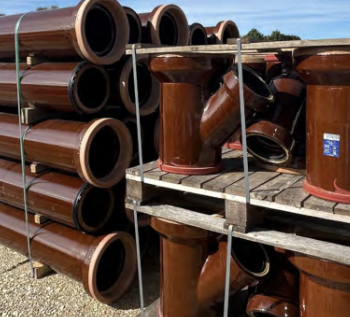
Why vitrified clay pipes are reclaiming their role in built projects.

Research by construction PR consultancy LMC published.
Roles and responsibilities of domestic clients

ACA Safety in Construction guide for domestic clients.
Fire door compliance in UK commercial buildings

Architect and manufacturer gives their low down.
Plumbing and heating for sustainability in new properties

Technical Engineer runs through changes in regulations, innovations in materials, and product systems.
Awareness of the Carbon Border Adjustment Mechanism
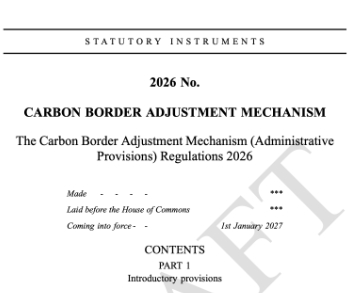
What CBAM is and what to do about it.
The new towns and strategic environmental assessments
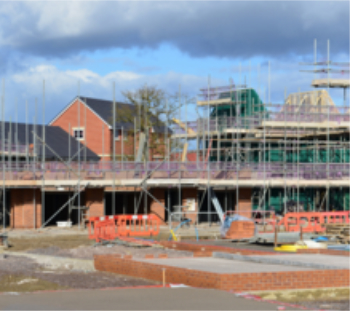
12 locations of the New Towns Taskforce reduced to 7 within the new towns draft programme and open consultation.

Buildings that changed the future of architecture. Book review.
The Sustainability Pathfinder© Handbook
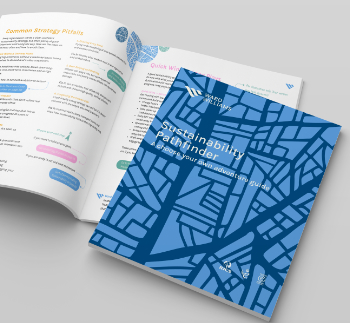
Built environment agency launches free Pathfinder© tool to help businesses progress sustainability strategies.

Government outcome to the late payment consultation, ECA reacts.
IHBC 2025 Gus Astley Student Award winners

Work on the role of hewing in UK historic conservation a win for Jack Parker of Oxford Brookes University.
Future Homes Building Standards and plug-in solar
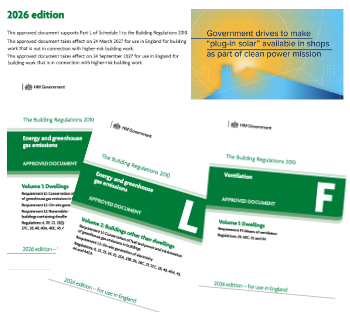
Parts F and L amendments, the availability of solar panels and industry responses.
How later living housing can help solve the housing crisis

Unlocking homes, unlocking lives.
Preparing safety case reports for HRBs under the BSA

A new practical guide to preparing structural inputs for safety cases and safety case reports published by IStructE.
Male construction workers and prostate cancer

CIOB and Prostate Cancer UK encourage awareness of prostate cancer risks, and what to do about it.
Comments
I can see that the construction industry in Uganda is not booming mostly because of delayed payments to contractors leaving them unmotivated. Can this phenomenon be attributed to the fact that most projects in Uganda take longer than expected thus incurring more costs? If so there is a need to look into the methods of production employed, to establish that they are not obsolete, management is not corrupt and is qualified. I would think it best to invest in time utilization.