





Soil treatment
Soil treatment can be used to make contaminated soil usable for agriculture and other purposes. If soil contains chemicals or wastes such as oil, alkali or some other non-degradable material, this can be treated using microbes. Soil contamination can be caused by a number of activities, such as the inappropriate disposal of industrial waste, sewage, agricultural chemicals, and so on. Moisture holding capacity, aeration, and nutrients are depleted in polluted soil.
Government initiatives to improve food cultivation techniques to satisfy the growing population is driving soil treatment, however, a lack of knowledge and awareness in underdeveloped countries about the significance of soil treatment is restraining the market. New and green technologies will generate growth of the market, along with demand from developed nations.
Soil treatment types can be classified as:
- Organic amendments (compost, crop residue, animal dung, and sewage sludge among others).
- pH adjusters (such as gypsum and aglime among others).
- Soil protection (pest and weed control).
Soil treatment technologies can be classified as:
- Biological treatment.
- Physicochemical treatment.
- Thermal treatment.
Biological treatment consists of biosparing, phytoremediation, bioventing, bioremedation. Physicochemical treatment includes electric resistance heating, soil flushing, chemical oxidation, soil vapour extraction (SVE), fracturing, solidification and stabilisation. pH adjustors, soil protection, organic amendments are also types of soil treatment. Weed and pest control are subtypes of soil protection and this area holds the largest market share. Crop residue, sewage sludge, manure, and compost are types of organic amendments, of which crop residue is emerging as a potential market. Gypsum and Aglime are the key pH adjusters for soil treatment.
The soil treatment market can be segmented into North America, Europe, Asia Pacific, Latin America and Middle East & Africa. U.S., Germany, UK, France, China, Japan and India will fuel the growth of market in future. Asia-Pacific is expected to become the largest market, due to the rising population and increasing food demand.
Key companies leading in soil treatment markets are Monsanto Company, AgraQuest, Syngenta AG, Solvay S.A., AMVAC Chemical Corporation, Novozymes A/S, Kanesho Soil Treatment, Arysta Life Science, Arkema S.A, BASF SE.
[edit] Find out more
[edit] Related articles on Designing Buildings Wiki
- Brownfield land.
- Building on fill.
- Construction dust.
- Contaminated land.
- Deleterious materials.
- Demolition.
- Environmental engineering.
- Ground conditions.
- Ground improvement techniques.
- Ground investigation.
- Hazardous substances.
- Hydraulically treated soils in residential construction (BR 513).
- Landfill tax.
- Methane and other gasses from the ground.
- Pollution.
- Pre-construction information.
- Radon.
- Site appraisal.
- Site investigation.
- Soil survey.
- Solid and liquid contaminants risk assessments.
- Types of soil.
Featured articles
Check out some of the best features and news from Designing Buildings as well as key stories from around the web.
Bridging the gap between clients and contractors

Concerns remain around contractor quality, capability, and delivery.
Construction Management, 10 June.

Heat pumps beat boilers in new home tests.
Building Safety Act implementation in Wales

CIAT to host industry panel on 26 June.
New and updated CLC building safety guidance.
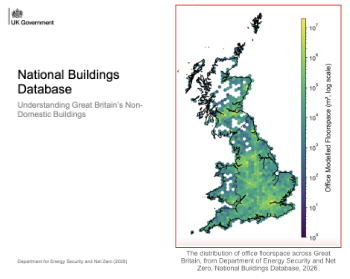
New UK National Buildings Database.
Building Safety Wiki Interviews

Chief executive of the British Woodworking Federation.
Planning condition discharge in England and Wales

A brief explanation from a building compliance expert, with further links.
Overheating guidance and tools for building designers

Guidance for dealing with element of building fabric control that have increasing importance.
Shading for housing, a design guide

From the Good Homes Alliance and British Blind and Shutter Association.
UK Standard Skills Classification (SSC)

A shared framework for describing skills needs.
Social media ban consultation comes to close

CIOB urges UK Government to consider social media’s role in careers guidance in ban debate.
Comments