





Public authority
The Freedom of Information Act (FOIA) defines a public authority as any body which, any other person who, or the holder of any office which:
- Is listed in schedule 1, or
- Is designated by order under section 5, or
- A publicly-owned company as defined by section 6.
Schedule 1 suggests that public authorities include:
- Government departments.
- Legislative bodies.
- The armed forces.
- Local government.
- The National Health Service.
- The Police.
- Maintained schools.
- Further and higher education institutions.
- Other public bodies, including individually named non-departmental public bodies.
Section 4(4) of the Act permits certain additions to and removals from schedule 1.
Section 5 permits the Secretary of State to designate bodies as public authorities if they appear to be carrying out functions of a public nature or are contracted to provide a service which is a function of a public authority.
Section 6 suggests that a company is publicly-owned if:
- It is wholly owned by the Crown,
- It is wholly owned by the wider public sector, or
- It is wholly owned by the Crown and the wider public sector.
[edit] Related articles on Designing Buildings Wiki
- Composition of UK construction industry 2013.
- Construction industry institutes and associations.
- Government departments responsibility for construction.
- Local authority.
- Local government.
- Local planning authority.
- Planning authority.
- Public body.
- Public building.
- Public contracting authority.
- UK.
- Unitary authority.
Featured articles
Check out some of the best features and news from Designing Buildings as well as key stories from around the web.

Your views needed - a strategy for the professions, trades and occupations.

Confronting competency, codes, capacity and costs.

The hidden risk in modern construction supply chains.
Construction Management, 10 June

24 months to 14: CITB launches accelerated apprenticeships.
Bridging the gap between clients and contractors

Concerns remain around contractor quality, capability, and delivery.
Construction Management, 10 June.

Heat pumps beat boilers in new home tests.
Building Safety Act implementation in Wales

CIAT to host industry panel on 26 June.

New and updated CLC building safety guidance.
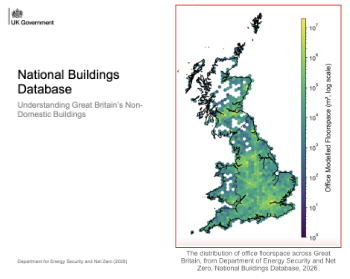
New UK National Buildings Database.
Building Safety Wiki Interviews

Chief executive of the British Woodworking Federation.
Planning condition discharge in England and Wales

A brief explanation from a building compliance expert, with further links.