






Power factor for lamps
According to BRE’s The essential guide to retail lighting:
The term ‘power factor’ is ‘…A measure of the phase difference between the voltage and current in an alternating current (AC) supply. For lamp types other than incandescent, the voltage and current waveforms are not exactly in phase with one another: thus the volts multiplied by the amperes in the circuit may be higher than the Watts. In such cases, the Watts represent the active power, and the volts multiplied by the amperes represent the apparent power. The power factor is the ratio of the absolute value of the active power to the apparent power. Ideally, the power factor should be as close to unity as possible. A low value of the power factor increases the current load and the energy consumption. Most high-wattage lamp circuits are designed to have a power factor greater than 0.85.’
[edit] Find out more
[edit] Related articles on Designing Buildings Wiki
- Ballast or control gear.
- Colour appearance.
- Daylight benefits in healthcare buildings.
- Daylight factor.
- Daylight lighting systems.
- Dichroic reflector.
- Discharge lamp.
- Extra-low voltage lamps.
- General lighting v task lighting.
- Illuminance.
- Lamp.
- Lamp efficacy.
- Light pollution.
- Lighting.
- Lighting energy numeric indicator LENI.
- Lighting of construction sites.
- Luminaire efficacy.
- Rights to light.
- The Future of Electricity in Domestic Buildings.
- The UK’s low-carbon future is increasingly electric.
Featured articles and news

ECA, JIB and JTL back Fabian Society call to invest in skills for a stronger built environment workforce.

Women's Contributions to the Built Environment.
Calls for the delayed Circular Economy Strategy

Over 50 leading businesses, trade associations and professional bodies, including CIAT, and UKGBC sign open letter.
The future workforce: culture change and skill

Under the spotlight at UK Construction Week London.

A landmark moment for postmodern heritage.
A safe energy transition – ECA launches a new Charter

Practical policy actions to speed up low carbon adoption while maintaining installation safety and competency.
Frank Duffy: Researcher and Practitioner

Reflections on achievements and relevance to the wider research and practice communities.
The 2026 Compliance Landscape: Fire doors

Why 'Business as Usual' is a Liability.
Cutting construction carbon footprint by caring for soil

Is construction neglecting one of the planet’s most powerful carbon stores and one of our greatest natural climate allies.
ARCHITECTURE: How's it progressing?

Archiblogger posing questions of a historical and contextual nature.
The roofscape of Hampstead Garden Suburb
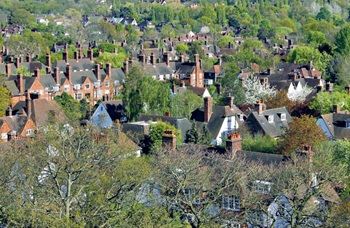
Residents, architects and roofers need to understand detailing.
Homes, landlords. tenants and the new housing standards

What will it all mean?
The Architectural Technology podcast: Where it's AT

Catch-up on the latest episodes.
Edmundson Apprentice of the Year award 2026

Entries now open for this Electrical Contractors' Association award.

Traditional blue-grey slate from one of the oldest and largest UK slate quarries down in Cornwall.

There are plenty of sources with the potential to be redeveloped.
Change of use legislation breaths new life into buildings

A run down on Class MA of the General Permitted Development Order.
Solar generation in the historic environment
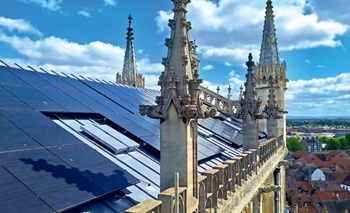
Success requires understanding each site in detail.