





Management Information System
A management information system (MIS) supports management by pooling information from various sources, compiling it, manipulating it and presenting it legibly. It can give managers necessary information to help them make informed decisions. The ultimate aim of a MIS is to increase a business’s efficiency, productivity, profitability and so value.
Information gathered by an MIS can cover technology, people, relationships, processes, purchases, sales and so on and can be used to monitor the performance of a company, project or programme.
Typical uses for a MIS include:
- Making decision-making more effective and productive.
- Collecting business information.
- Compiling reports.
- Identification of areas that need improvement.
- Allowing management of work schedules and allocation of resources.
- Fostering communication and collaboration.
- Allowing employees to spend more time on productive tasks.
- Giving managers feedback about their own performance.
Although today, MIS is generally a digital-based tool, MIS systems predate modern computer technology. The modern development of the MIS is closely linked to the development stages of the computer, spanning mainframe, PCs and client/servers to cloud computing. The use of add-on software can tailor the performance of an MIS to specific tasks.
Management information systems may be used by all levels of management. However, it usually falls to the chief information officer (CIO) and chief technical officer (CTO) (or equivalent) to decide which systems to implement.
Inputting information into an MIS need not just be reserved for higher management – non-management staff can also input data although they may not always have access to the reports that are subsequently compiled.
Common types of management information systems can include:
- Executive information systems – facilitating and supporting senior decision making.
- Decision support system – serving senior executives decision-making needs.
- Marketing information systems – supporting marketing decision-making.
- Human resource management systems – facilitating the management of people.
- Transaction processing systems. – collecting, processing and storing daily transactions.
[edit] Related articles on Designing Buildings Wiki
- BIM.
- Code of practice for project management.
- Code of practice for programme management.
- Construction inventory management.
- Guide to managing construction projects.
- Logistics management in construction.
- Management structure for construction clients.
- Managing the procurement process.
- Performance management plan.
- Practice management.
- Relationship management.
- Safety management.
- Total quality management in construction.
- Value management.
Featured articles
Check out some of the best features and news from Designing Buildings as well as key stories from around the web.
Bridging the gap between clients and contractors

Concerns remain around contractor quality, capability, and delivery.
Construction Management, 10 June.

Heat pumps beat boilers in new home tests.
Building Safety Act implementation in Wales

CIAT to host industry panel on 26 June.

New and updated CLC building safety guidance.
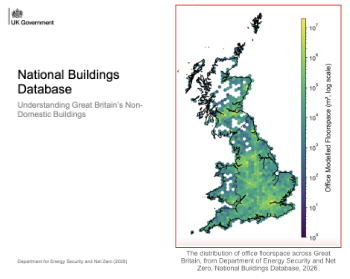
New UK National Buildings Database.
Building Safety Wiki Interviews

Chief executive of the British Woodworking Federation.
Planning condition discharge in England and Wales

A brief explanation from a building compliance expert, with further links.
Overheating guidance and tools for building designers

Guidance for dealing with element of building fabric control that have increasing importance.
Shading for housing, a design guide

From the Good Homes Alliance and British Blind and Shutter Association.
UK Standard Skills Classification (SSC)

A shared framework for describing skills needs.
Social media ban consultation comes to close

CIOB urges UK Government to consider social media’s role in careers guidance in ban debate.