





Landlord and Tenant Acts
The Landlord and Tenant Act of 1954 was divided into two parts. It was aimed to provide security of tenure for residents (part 1) and businesses (part 2) of properties over a specified number of years. However the Housing Acts of 1924 and 1930 were in many ways more relevant residential tenants, particularly social housing tennants, the latter of which obliged local councils to clear slum housing, and provide re-housing.
Ammendments to the same Landlord and Tenant Act started to require the giving of information by landlords to tenants such as the rent books in 1962, gradually oriented more to commercial tenants, as residential aspects of the Act became superseded by other legislation. The Act of 1985 increased the information requirements on landlords, including obligations to repair. In effect the the Landlord and Tenant Act of 1985, reviewed the notions of covenants in leases but also consolidated certain provisions in law of landlord and tenants formerly found in the Housing Acts, together with those in the original Landlord and Tenant Act of 1962.
The Landlord and Tenant Act of 1987, granted tenants a right of first refusal of a disposal (offer) under certain circumstances and, according to the government website is up to date with all changes known to be in force on or before April 2023. Though it is important to note that many provisons for both landords and tenants became increasingly also covered by a vareity of other legislative vehicles. For example key provisions of the Housing Act 1988 was the introduction of assured shorthold tenancies, which gave tenants the right to stay in a property for a fixed period of time and gave landlords the right to regain possession of the property after the tenancy had ended. This relates to assignment or the transfer of rights, to balance where consent could previously be withheld by landlords for no good reason, the aim being to ensure refusal only for good reason.
There are a number of other potential legislative changes that will impact both landlords and tenant via changes in energy perfrmance requirements of buildings to the Renters Reform Bill, which may see all tenancies becoming periodic, with fixed term tenancies, section 21 notices and blanket bans on tenants banned.
[edit] Related articles on Designing Buildings
- Agricultural tenancy.
- Break clauses in leases.
- Comparable rent accusations.
- Ground rent.
- Homes (Fitness for Human Habitation) Act 2018.
- How to evict a tenant.
- Landlord.
- Lease Negotiations - Tenants Checklist.
- Leasehold.
- Leasehold covenants.
- Property guardianship.
- Rent.
- Rent-free period.
- Rent in administration.
- Rent review.
- Sample retail lease.
- Section 13 notice.
- Section 21 notice.
- Security of tenure.
- Service charge.
- Short term lets.
- Statutory declaration excluding security of tenure.
- Tenancy deposit protection.
- Tenant.
- Vacant possession.
[edit] External references
Featured articles and news

We're expanding our collaborative mission by launching DB Intelligence, an exclusive market research advisory panel. Built environment professionals can now get paid to share their expertise on industry trends, products and services.
Panel members receive direct financial incentives for participating in research projects like short surveys, 1-2-1 interviews and focus groups. Register today to shape the future of the construction sector.
Building Safety Wiki Interviews

Chief executive of the British Woodworking Federation.
Planning condition discharge in England and Wales

A brief exoplanation from a building compliance expert, with further links.
Overheating guidance and tools for building designers

Guidance for dealing with element of building fabric control that have increasing importance.
Shading for housing, a design guide

From the Good Homes Alliance and British Blind and Shutter Association.
UK Standard Skills Classification (SSC)

A shared framework for describing skills needs.
Social media ban consultation comes to close

CIOB urges UK Government to consider social media’s role in careers guidance in ban debate.
The latest of eight Skills England apprenticeship units

The addition of battery manufacturing welcomed by ECA with a warning about the risks of fast-tracked apprenticeship units.
Building Control Independent Panel final report

A precis of a key report led by Dame Hackitt with full recommendations and link to the government response.
Building Safety recap April, 2026

A short and longer run-through of the month, with links to further information and sources.

CIAT May 2026 briefing.

From medieval scribes to modern word art.

ECA welcomes crackdown on late payment and push for clean energy, whilst CIOB seek fixed cladding removal timeframes.
Cyber Security in the Built Environment
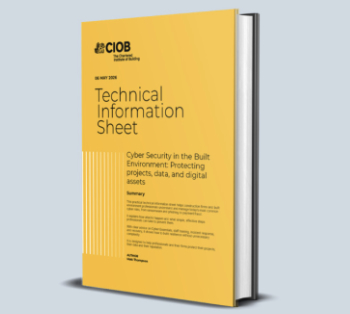
Protecting projects, data, and digital assets: A CIOB Academy TIS.
Managing competence in the built environment

ITFG publishes new industry guide on how to meet the ICC principles.