





Intermediary cities
Intermediary cities (intermediate cities or i-cities) are cities with a population of 50,000 to one million. They are small and medium-sized cities that perform a linking role, helping ease the transition between rural areas and larger cities, and providing useful markets and access to services. They may also connect cities within an urban area, and can help relieve pressure on larger cities and megacities.
It is estimated that 20% of the world´s population live in intermediary cities. Ref https://www.uclg.org/en/agenda/intermediary-cities
Intermediary cities can be more efficient than larger cities, with more effective government, better social cohesion and greater flexibility.
However, they can be vulnerable to change, tend to have a poorer population than larger cities and often lack resources and opportunities. They can be excluded from decision making processes and are often overlooked in policy decision making, but are considered vital to the sustainable development of the global population.
Many intermediate cities are growing rapidly, in particular those in Africa and South America.
[edit] Related articles on Designing Buildings
Featured articles and news

We're expanding our collaborative mission by launching DB Intelligence, an exclusive market research advisory panel. Built environment professionals can now get paid to share their expertise on industry trends, products and services.
Panel members receive direct financial incentives for participating in research projects like short surveys, 1-2-1 interviews and focus groups. Register today to shape the future of the construction sector.
Building Control Independent Panel final report
A precis of a key report led by Dame Hackitt with full recommendations and link to the government response.
Guide to ISO 19650 for Architecture Firms (2026)
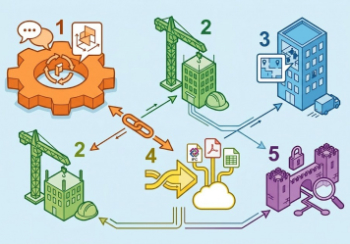
A user gives their low down.

A UK training and membership provider for mould remediation professionals.
Building Safety recap April, 2026
A short and longer run-through of the month, with links to further information and sources.
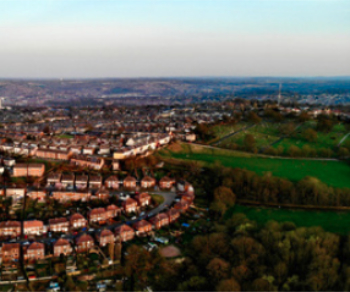
CIAT May 2026 briefing.

Independent NSI and BAFE study exploring how organisations are changing the way they buy fire safety services.

From medieval scribes to modern word art.

ECA welcomes crackdown on late payment and push for clean energy, whilst CIOB seek fixed cladding removal timeframes.
Cyber Security in the Built Environment
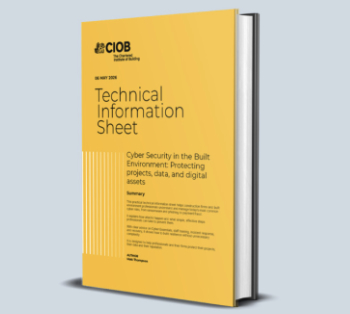
Protecting projects, data, and digital assets: A CIOB Academy TIS.
Managing competence in the built environment
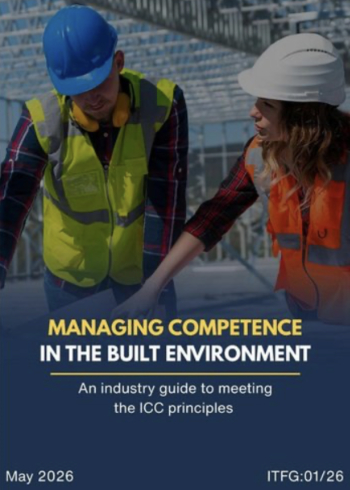
ITFG publishes new industry guide on how to meet the ICC principles.
The UK's campaign to reduce noise pollution: Mythbusting, articles and topic guides.