






Inspiring Tomorrow's Engineers
In December 2017, BSRIA launched its Inspiring Tomorrow’s Engineers publication which was written by a workplace student Emma Hardacre. The report considers engineering careers over a wide selection of industries and how to choose the appropriate career path and entry route suitable for individual interests and skills. The work was carried out as part of BSRIA’s INSPIRE project which works with local schools, national and local politicians and the media to promote STEM and change its perceptions.
Choosing the right engineering path is a 'daunting process' and one that must be made 'early on' before selecting exam options, college courses or apprenticeships. The publication highlights specifics on the myriad of careers in engineering, especially those related to building services. The report offers a cross-section of information on the main responsibilities, entry routes, salary ranges and career progression opportunities for each vocation.
INSPIRE raised the questions - why are STEM subjects important? What does engineering mean for you? Why does technology matter? There is one answer to those three questions which is quite simply 'everything'. History has shown that those who pursue science arguably make the biggest impact to the world; incredible minds give us incredible ideas we once might have thought of as unbelievable but are now rooted in our society.
In this respect BSRIA is delighted to be celebrating the 2018 Year of Engineering and will be running a series of events and careers days with local schools and colleges. This national campaign is designed to increase awareness and understanding of what engineers do among young people aged seven to 16, their parents and teachers.
Emma researched roles from architect to civil engineer, environmental adviser, geotechnical contractor, acoustical engineer, lift & escalator engineer to structural engineering technician.
Under each role Emma explored:
- Job description.
- Entry routes.
- Professional qualifications available.
- Career development options.
- Salary range per year.
- References and useful resources.
Emma also had a glimpse into the future and came up with some predictions on the key trends that will shape it:
BIM – on the construction site – not just in the design phase:
Currently BIM managers/technicians are only found in the design phase. The idea is to extend this into the construction phase as well to make the whole process smoother and more coherent.
Fitting sensors into the structure of the building to monitor things like strain and thermal efficiency over the life time of the building. It will mean that the performance of the building can be monitored throughout its whole life time and any adjustments or repairs needed can be made before they threaten the integrity of the buildings structure and ability to function.
Artificial Intelligence:
Will humans be replaced by machines to complete a task? New machines could be brought in to create designs, survey sites and complete construction tasks.
Wellbeing:
Will there be a greater focus on what buildings can do for the wellbeing of its occupants? Will there be engineers employed/trained solely for this purpose?
Soft Landings – smoother handover process:
As it stands, there is no real hand over process between the engineers and contractors responsible for constructing the building and the facilities managers and tenants who take on the building after completion. This leads to a lack of understanding as to how to utilise the buildings functions and ensure it is properly maintained.
To see the original article published by BSRIA and to download the report, see here.
--BSRIA
[edit] Related articles on Designing Buildings Wiki
- BSRIA articles on Designing Buildings Wiki.
- Design and technology DT.
- How to become an engineer.
- Innovation – the key differentiator.
- Inspiration Series for 16 to 18 year olds launched.
- INSPiRe renovation solutions for residential and office buildings.
- Inspiring tomorrow's engineers, career path stories.
- Smart cities and smart energy.
- The future of heat.
- The impact of digital on civil engineering.
- Thermal comfort and wellbeing.
- Workplaces of the future.
Featured articles and news
Costs and insolvencies mount for SMEs, despite growth

Construction sector under insolvency and wage bill pressure in part linked to National Insurance, says report.
The place for vitrified clay pipes in modern infrastructure
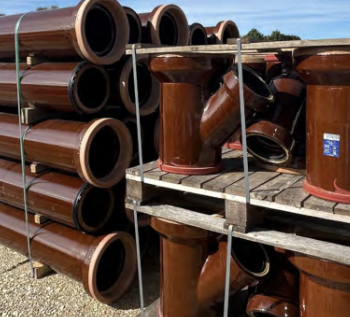
Why vitrified clay pipes are reclaiming their role in built projects.

Research by construction PR consultancy LMC published.
Roles and responsibilities of domestic clients

ACA Safety in Construction guide for domestic clients.
Fire door compliance in UK commercial buildings

Architect and manufacturer gives their low down.
Plumbing and heating for sustainability in new properties

Technical Engineer runs through changes in regulations, innovations in materials, and product systems.
Awareness of the Carbon Border Adjustment Mechanism
What CBAM is and what to do about it.
The new towns and strategic environmental assessments
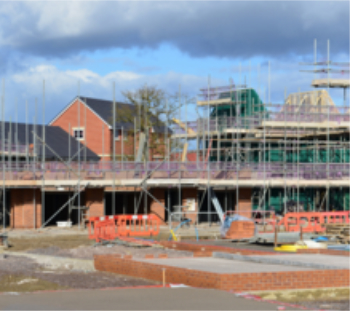
12 locations of the New Towns Taskforce reduced to 7 within the new towns draft programme and open consultation.
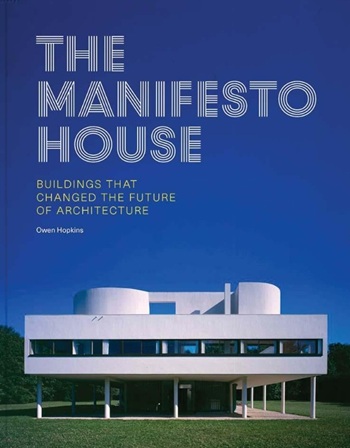
Buildings that changed the future of architecture. Book review.
The Sustainability Pathfinder© Handbook
Built environment agency launches free Pathfinder© tool to help businesses progress sustainability strategies.
Government outcome to the late payment consultation, ECA reacts.
IHBC 2025 Gus Astley Student Award winners

Work on the role of hewing in UK historic conservation a win for Jack Parker of Oxford Brookes University.
Future Homes Building Standards and plug-in solar
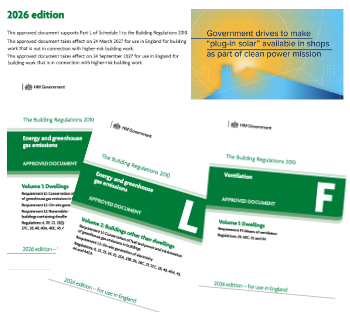
Parts F and L amendments, the availability of solar panels and industry responses.
How later living housing can help solve the housing crisis

Unlocking homes, unlocking lives.
Preparing safety case reports for HRBs under the BSA
A new practical guide to preparing structural inputs for safety cases and safety case reports published by IStructE.
Male construction workers and prostate cancer

CIOB and Prostate Cancer UK encourage awareness of prostate cancer risks, and what to do about it.