





Hybrid construction contract

Contents |
[edit] Introduction
A contract is a promise or set of promises between two or more parties (the promisor and the promisee) which the law will enforce. In the procurement of construction, contracts are frequently standard, modified or bespoke. They can also be hybrid.
Hybrid contracts are agreements that cover those activities defined under the Housing Grants, Construction and Regeneration Act 1996. This includes construction and non-construction activities.
Section 105 of the Act defines construction activities (classified as a broad range of operations) covered with certain industry-specific exclusions. Non-construction activities are also defined in the Act, but they are only covered under a hybrid contract.
[edit] Hybrid contracts and payment
According to a 6 March 2020 London court ruling, the Act no longer requires hybrid contracts to identify specific construction and non-construction activities. The case of C Spencer Ltd (CSL) v M W High Tech Projects UK Limited (MW) exposed a lack of clarity regarding payments to the contractor (MW) and the subcontractor (CSL) during a project to construct a waste to energy power plant.
This ambiguity around construction and non-construction activities was the cause of court decisions in the past. However, the 2020 ruling stated that the phrase “only in so far as it relates to construction operations" was not necessary with regard to payment terms for non-construction activities in hybrid contracts.
This is clarified further by Simmons+Simmons:
"Hybrid construction contracts are those which include both construction operations covered by the Housing Grants, Construction and Regeneration Act 1996 (the Act) and non-construction operations. The Act has been of great assistance to the construction industry by providing clear and certain provisions in respect of payment applications and the dispute resolution procedure, which has in turn improved cash flow. However, the Act is not as comprehensive as some might have hoped. The use of ‘hybrid contracts’, i.e. those which include both construction operations (as defined by s.104 of the Act) and non-construction operations (not covered by the Act), has resulted in uncertainty.
"The dispute between M W High Tech Projects UK Limited (MW) and C Spencer Ltd (CSL) arose out of this uncertainty. In this case, the court found that payment notices for hybrid construction contracts do not need to separately identify the sums owing for ‘construction operations’, together with the basis of the breakdown, in order to be valid."
[edit] Related articles on Designing Buildings Wiki
- Act.
- Construction contract.
- Construction contract conditions
- Fair payment practices.
- Housing Grants, Construction and Regeneration Act HGRA.
- Modifying clauses in standard forms of construction contract.
- Scheme for Construction Contracts.
[edit] External resources
- England and Wales Court of Appeal (Civil Division) Decisions, C Spencer Ltd v M W High Tech Projects UK Limited [2020 EWCA Civ 331 (06 March 2020)].
- Legislation.gov.uk, Housing Grants, Construction and Regeneration Act 1996.
- Out-Law News, Court of Appeal clarifies UK Construction Act treatment of hybrid contracts, 9 March 2020.
- Simmons + Simmons, Hybrid construction contracts - payment notices.
Featured articles and news

ECA, JIB and JTL back Fabian Society call to invest in skills for a stronger built environment workforce.

Women's Contributions to the Built Environment.
Calls for the delayed Circular Economy Strategy

Over 50 leading businesses, trade associations and professional bodies, including CIAT, and UKGBC sign open letter.
The future workforce: culture change and skill

Under the spotlight at UK Construction Week London.

A landmark moment for postmodern heritage.
A safe energy transition – ECA launches a new Charter
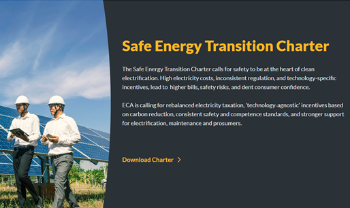
Practical policy actions to speed up low carbon adoption while maintaining installation safety and competency.
Frank Duffy: Researcher and Practitioner

Reflections on achievements and relevance to the wider research and practice communities.
The 2026 Compliance Landscape: Fire doors

Why 'Business as Usual' is a Liability.
Cutting construction carbon footprint by caring for soil

Is construction neglecting one of the planet’s most powerful carbon stores and one of our greatest natural climate allies.
ARCHITECTURE: How's it progressing?
Archiblogger posing questions of a historical and contextual nature.
The roofscape of Hampstead Garden Suburb

Residents, architects and roofers need to understand detailing.
Homes, landlords. tenants and the new housing standards

What will it all mean?
The Architectural Technology podcast: Where it's AT

Catch-up on the latest episodes.
Edmundson Apprentice of the Year award 2026

Entries now open for this Electrical Contractors' Association award.

Traditional blue-grey slate from one of the oldest and largest UK slate quarries down in Cornwall.

There are plenty of sources with the potential to be redeveloped.
Change of use legislation breaths new life into buildings

A run down on Class MA of the General Permitted Development Order.
Solar generation in the historic environment

Success requires understanding each site in detail.