





How to design a smart city
Over half the planet's population now lives in cities. This figure is predicted to rise to more than 70% by the second half of the century.
Cities are becoming our economic powerhouses; competing to attract global businesses, skilled employees and eager consumers. The basis of this competition is broad and includes: access to education and jobs, personal safety and security, effective healthcare, efficient transport, an attractive physical environment and vibrant communities.
However, whilst densely populated cities should be more sustainable than less concentrated rural settlements, they actually account for more than 75% of the consumption of non-renewable resources, and create around 75% of global pollution. With climate change threatening many cities through rising sea levels, increasingly volatile weather patterns and diminishing resources, the governments of both developed and developing countries face the demand not only for improved social conditions and better economic prospects, but also, greater resilience and more environmentally-sound city forms.
If we collaborate, and view these challenges as opportunities, smart city solutions may offer us a way forward. Smart cities not only optimise the use of technology in the design and operation of infrastructure and buildings, they also consider governance and growth, urban development and infrastructure, the environment and natural resources, society and community.
Creating smart cities is a complex, long-term process, and its success depends on a sustained commitment to a clear course of action. Smart cities require a genuinely integrated, multi-disciplinary approach. Design teams must operate across the complete project lifecycle, from assessing the physical opportunities and constraints and considering the viability of options, to working with planners and developers to design and build the best solutions.
Featured articles and news

We're expanding our collaborative mission by launching DB Intelligence, an exclusive market research advisory panel. Built environment professionals can now get paid to share their expertise on industry trends, products and services.
Panel members receive direct financial incentives for participating in research projects like short surveys, 1-2-1 interviews and focus groups. Register today to shape the future of the construction sector.
Building Control Independent Panel final report
A precis of a key report led by Dame Hackitt with full recommendations and link to the government response.
Guide to ISO 19650 for Architecture Firms (2026)
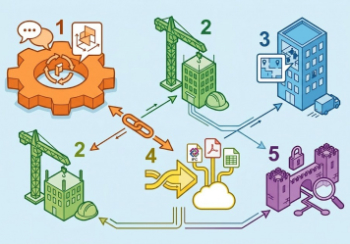
A user gives their low down.

A UK training and membership provider for mould remediation professionals.
Building Safety recap April, 2026

A short and longer run-through of the month, with links to further information and sources.
CIAT May 2026 briefing.

Independent NSI and BAFE study exploring how organisations are changing the way they buy fire safety services.

From medieval scribes to modern word art.

ECA welcomes crackdown on late payment and push for clean energy, whilst CIOB seek fixed cladding removal timeframes.
Cyber Security in the Built Environment

Protecting projects, data, and digital assets: A CIOB Academy TIS.
Managing competence in the built environment
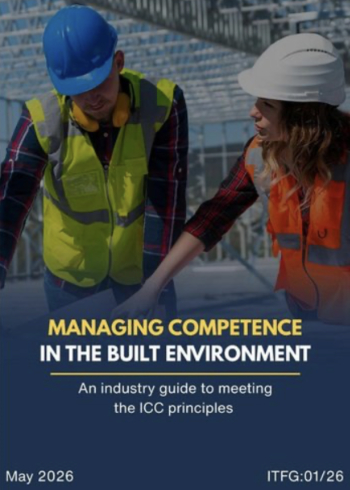
ITFG publishes new industry guide on how to meet the ICC principles.

The UK's campaign to reduce noise pollution: Mythbusting, articles and topic guides.