





How CAD Conversion Services Transform Product Design
In today’s competitive product-design landscape, innovation isn’t enough efficiency, accuracy, and clear communication are equally essential. CAD Conversion Services help bridge the gap between idea and execution by transforming sketches, 2D drawings, or physical molds into precise, workable CAD models. This enables better visualization, fewer errors, and faster time-to-market.
Contents |
[edit] What Is CAD Conversion?
CAD conversion refers to taking existing design formats hand sketches, scanned paper drawings, 2D blueprints or PDFs and turning them into editable, accurate CAD files. Depending on project needs, this may involve creating 2D CAD drawings, 3D models, isometric views, cross-sections, or converting between CAD file formats (e.g., DWG, DXF, IGES, STEP).
When combined with 3D modeling workflows, CAD conversion unlocks powerful possibilities for visualizing, refining, simulating, and manufacturing products more precisely.
[edit] Key Benefits of CAD Conversion Services in Product Design
Converting rough sketches or scanned drawings into 3D models provides a clear view of form, features, and proportions before production. This reduces misinterpretation and design errors.
- Streamlined Design Review & Iteration
Editable CAD models make it easier to review, revise, and update designs. Stakeholders can quickly assess and approve changes without multiple physical prototypes.
- Error Reduction & Cost Savings
Ambiguities in manual or 2D processes often lead to mistakes. CAD conversion highlights alignment issues, missing dimensions, or tolerance problems early, saving costly rework.
- Faster Time to Market
By minimizing back-and-forth corrections, CAD conversion speeds up approvals, prototyping, and manufacturing hand-offs. This accelerates the product development cycle.
- Improved Collaboration Across Teams
CAD files can be shared and edited across platforms, ensuring all stakeholders designers, engineers, manufacturers work from the same version.
- Integration with Manufacturing Tools
Converted models can be directly used in CAM systems, CNC machining, 3D printing, or prototyping. Interoperable formats such as STEP and IGES enhance compatibility with vendors and suppliers.
- Sustainability and Waste Reduction
With fewer physical prototypes and improved accuracy, CAD conversion helps minimize material waste and supports eco-friendly design practices.
[edit] Common Use Cases for CAD Conversion Services
- Converting legacy design archives into editable CAD formats
- Turning hand sketches or conceptual drawings into detailed 3D models
- Updating outdated 2D CAD drawings into modern 3D models
- File format conversions (DWG, DXF, STEP, IGES, etc.) for collaboration
[edit] Conclusion
The shift from paper drawings or static 2D files to interactive, precise CAD models has transformed product design. CAD Conversion Services ensure clarity, efficiency, and seamless collaboration across every stage of development. From reducing errors to accelerating market readiness, these services play a vital role in helping ideas evolve into successful, manufacturable products.
Featured articles
Check out some of the best features and news from Designing Buildings as well as key stories from around the web.
Construction Management, 10 June
24 months to 14: CITB launches accelerated apprenticeships.
Bridging the gap between clients and contractors

Concerns remain around contractor quality, capability, and delivery.
Construction Management, 10 June.
Heat pumps beat boilers in new home tests.
Building Safety Act implementation in Wales

CIAT to host industry panel on 26 June.
New and updated CLC building safety guidance.
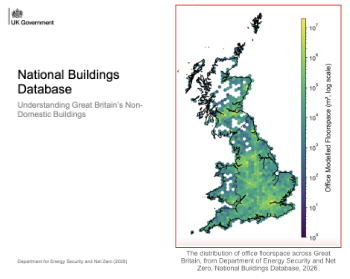
New UK National Buildings Database.
Building Safety Wiki Interviews

Chief executive of the British Woodworking Federation.
Planning condition discharge in England and Wales

A brief explanation from a building compliance expert, with further links.
Overheating guidance and tools for building designers

Guidance for dealing with element of building fabric control that have increasing importance.
Shading for housing, a design guide

From the Good Homes Alliance and British Blind and Shutter Association.
UK Standard Skills Classification (SSC)

A shared framework for describing skills needs.