





Energy budget
In the built environment, the term 'energy' is typically used in the context of generating heat, powering equipment, creating products and materials, transportation, and so on.
An energy budget is a specific target for Energy Use Intensity (EUI) that must not by exceeded, where Energy Use Intensity is an annual measure of the total energy consumed in a building. Ref Climate Emergency Design Guide: How new buildings can meet UK climate change targets, published by the London Energy Transformation Initiative (LETI) in January 2020.
Climate Change 2021 – The Physical Science Basis, Annex VII: Glossary, written by the Intergovernmental Panel on Climate Change (IPCC) and published by Cambridge University Press in 2023, states: ‘The Earth is a physical system with an energy budget that includes all gains of incoming energy and all losses of outgoing energy. The Earth’s energy budget is determined by measuring how much energy comes into the Earth system from the Sun, how much energy is lost to space, and accounting for the remainder on Earth and its atmosphere. Solar radiation is the dominant source of energy into the Earth system. Incoming solar energy may be scattered and reflected by clouds and aerosols or absorbed in the atmosphere. The transmitted radiation is then either absorbed or reflected at the Earth’s surface. The average albedo of the Earth is about 0.3, which means that 30% of the incident solar energy is reflected into space, while 70% is absorbed by the Earth. Radiant solar or shortwave energy is transformed into sensible heat, latent energy (involving different water states), potential energy, and kinetic energy before being emitted as infrared radiation. With the average surface temperature of the Earth of about 15°C (288 K), the main outgoing energy flux is in the infrared part of the spectrum.’
See also: Energy intensity and Carbon budget.
[edit] Related articles on Designing Buildings
Featured articles and news
Building Control Independent Panel final report
A precis of a key report lead by Dame Hackitt with full recomendations and link to the government response.
Guide to ISO 19650 for Architecture Firms (2026)
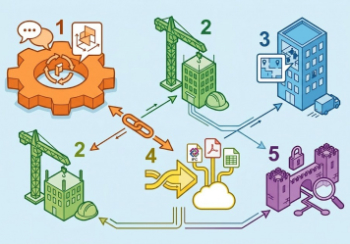
A user gives their low down.

A UK training and membership provider for mould remediation professionals.
Building Safety recap April, 2026

A short and longer run-through of the month, with links to further information and sources.
CIAT May 2026 briefing.

Independent NSI and BAFE study exploring how organisations are changing the way they buy fire safety services.

From medieval scribes to modern word art.

ECA welcomes crackdown on late payment and push for clean energy, whilst CIOB seek fixed cladding removal timeframes.
Cyber Security in the Built Environment
Protecting projects, data, and digital assets: A CIOB Academy TIS.
Managing competence in the built environment

ITFG publishes new industry guide on how to meet the ICC principles.

The UK's campaign to reduce noise pollution: Mythbusting, articles and topic guides.
Setting Expectations on Competence Management
Industry Competence Committee.
New Scottish and Welsh governments

CIOB stresses importance of construction after new parliament elections.
The sad story of Derby Hippodrome
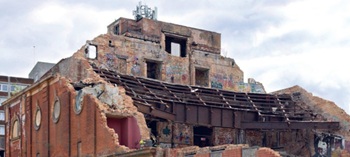
An historic building left to decay.

ECA, JIB and JTL back Fabian Society call to invest in skills for a stronger built environment workforce.
Comments
[edit] It would be good to define the scope of EUI and whether renewables are or are not included. LETI's definition within the Climate Emergency Design Guide excludes energy consumption from on-site renewable energy generation which differs from RIBA's Operational Energy targets which include energy consumption from renewable energy generation and LETI's subsequent FAQs on Net Zero. There is risk of relying solely on metrics which exclude on-site renewable generation as it can mask the poor performance of building fabric and operation.
[edit] To make a comment about this article, or to suggest changes, click 'Add a comment' above. Separate your comments from any existing comments by inserting a horizontal line.