





Direct employment
Direct employment (sometimes called direct labour) is a situation in which an organisation employs operatives directly rather than relying on sub-contractors or self-employed operatives. For example, a contractor may employ bricklayers themselves, rather than subcontracting out bricklaying to another organisation. It is quite common for local authorities to have their own direct labour department to undertake building work and to pay their wages.
Civil Engineering Procedure, 7th edition, published by the Institution of Civil Engineers, defines the term ‘direct labour’ as: ‘A promoter’s (client’s) own employees employed on construction, sometimes under the internal equivalent of a contract, otherwise as a service department.’
Britain emerged from the Second World War with a construction industry dominated by very large contractors that had grown from war time work and were rebuilding a country ravaged by the Blitz. Wimpey were the biggest of these contractors, directly employing most of the labour necessary to execute its projects. Taylor Woodrow, even with half the annual turnover of Wimpey, employed 40,000 people.
Today however, as buildings have become more complex, it is less and less likely that any one contractor will have the required skills to carry out all of the works necessary to construct them, and it does not make good commercial sense to take on new employees for one project that would then have to be laid off for the next. Increasingly therefore, contractors use sub-contractors to carry out particular elements of the works.
[edit] Related articles on Designing Buildings
Featured articles
Check out some of the best features and news from Designing Buildings as well as key stories from around the web.

New and updated CLC building safety guidance.
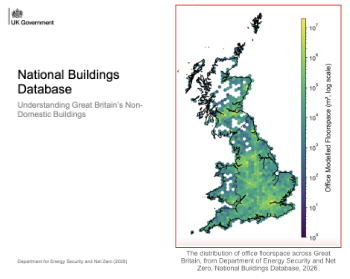
New UK National Buildings Database.
Building Safety Wiki Interviews

Chief executive of the British Woodworking Federation.
Planning condition discharge in England and Wales

A brief explanation from a building compliance expert, with further links.
Overheating guidance and tools for building designers

Guidance for dealing with element of building fabric control that have increasing importance.
Shading for housing, a design guide

From the Good Homes Alliance and British Blind and Shutter Association.
UK Standard Skills Classification (SSC)

A shared framework for describing skills needs.
Social media ban consultation comes to close

CIOB urges UK Government to consider social media’s role in careers guidance in ban debate.
The latest of eight Skills England apprenticeship units

The addition of battery manufacturing welcomed by ECA with a warning about the risks of fast-tracked apprenticeship units.
Building Control Independent Panel final report

A precis of a key report led by Dame Hackitt with full recommendations and link to the government response.
Building Safety recap April, 2026
A short and longer run-through of the month, with links to further information and sources.