





Control of noise at work regulations 2005
Contents |
[edit] What are noise at work regulations?
The Control of Noise at Work Regulations 2005 came into force in April 2006, they replaced the Noise at Work Regulations of 1989. Incidentally the Merchant Shipping and Fishing Vessels (Control of Noise at Work) Regulations 2007 came into force in February 2008.
In general the regulations were established under the Health and Safety at Work etc. Act 1974 and implemented European Council directive 2003/10/EC. The Control of Noise at Work Regulations 2005 replace the Noise at Work Regulations 1989.
The aim of the Noise Regulations is to ensure that workers' hearing is protected from excessive noise at their place of work, which could cause them to lose their hearing and/or to suffer from tinnitus (permanent ringing in the ears). The regulations require employers to protect their employees from levels of noise that could cause them hearing damage.
[edit] What is required of employers?
The Control of Noise at Work Regulations 2005 (Noise Regulations 2005) require employers to prevent or reduce risks to health and safety from exposure to noise at work. Employees also have duties under the Regulations too. The Regulations require employers to:
- Assess the risks to your employees from noise at work;
- Take action to reduce the noise exposure that produces those risks;
- Provide your employees with hearing protection if you cannot reduce the noise exposure enough by using other methods;
- Make sure the legal limits on noise exposure are not exceeded;
- Provide your employees with information, instruction and training;
- Carry out health surveillance where there is a risk to health.
The Regulations do not apply to members of the public exposed to noise from their non-work activities, making an informed choice to go to noisy places or low-level noise that is a nuisance but causes no risk of hearing damage.
[edit] What are the noise levels ?
The level at which employers must provide hearing protection and hearing protection zones is 85 dB(A) (daily or weekly average exposure) and the level at which employers must assess the risk to workers' health and provide them with information and training is 80 dB(A). There is also an exposure limit value of 87 dB(A), taking account of any reduction in exposure provided by hearing protection, above which workers must not be exposed.
The Noise Regulations require emploers to take specific action at certain action values. These relate to:
- the levels of exposure to noise of your employees averaged over a working day or week; and
- the maximum noise (peak sound pressure) to which employees are exposed in a working day.
These values are:
There are also levels of noise exposure which must not be exceeded. These are called exposure limit values:
[edit] Related articles on Designing Buildings
- Airborne sound.
- Building acoustics.
- Decibel.
- Environmental health.
- Impact sound.
- Injuries on construction sites.
- Noise.
- Noise at Work Assessment.
- Noise level.
- Sound absorption.
- Sound frequency.
- Sound v noise.
- Structure-borne sound.
- What hours are construction sites allowed to operate?
- Workplace noise exposure estimator.
[edit] External links
Featured articles
Check out some of the best features and news from Designing Buildings as well as key stories from around the web.
Construction Management, 10 June

24 months to 14: CITB launches accelerated apprenticeships.
Bridging the gap between clients and contractors

Concerns remain around contractor quality, capability, and delivery.
Construction Management, 10 June.
Heat pumps beat boilers in new home tests.
Building Safety Act implementation in Wales

CIAT to host industry panel on 26 June.

New and updated CLC building safety guidance.
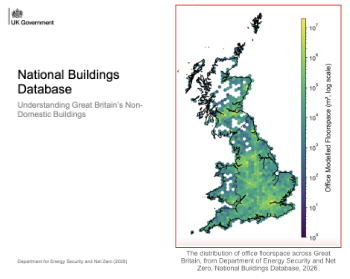
New UK National Buildings Database.
Building Safety Wiki Interviews

Chief executive of the British Woodworking Federation.
Planning condition discharge in England and Wales

A brief explanation from a building compliance expert, with further links.
Overheating guidance and tools for building designers

Guidance for dealing with element of building fabric control that have increasing importance.
Shading for housing, a design guide

From the Good Homes Alliance and British Blind and Shutter Association.
UK Standard Skills Classification (SSC)

A shared framework for describing skills needs.