





Code of practice for letting and managing agents
The government announced its intention to regulate letting agents in October 2017, and this was followed by a 6-week call for evidence.
On 1 April 2018, in response to the call for evidence, the government announced proposals to introduce stronger protections against rogue letting and managing agents. This is intended to combat unexpected costs, deliberately vague bills or poor quality repairs.
Under a new mandatory code of practice, letting and managing agents will be required to obtain a nationally-recognised qualification to practice, with at least one person in every organisation required to have a higher qualification.
The new code will be developed by a working group of representatives from letting, managing and estate agents, tenants and regulation experts, with final proposals expected to be drawn up in early 2019.
A new independent regulator, responsible for the working practices of agents, will be given enforcement powers, and agents who fail to comply will not be permitted to trade. Criminal sanctions could be brought for severe breaches of the code.
Other proposals to be brought in under the code include:
- A new system to help leaseholders challenge unfair fees including service charges.
- Support for leaseholders to switch their managing agents where they perform poorly or break the terms of their contract.
- A requirement for all letting and managing agents to undertake continuing professional development and training.
The working group will also look into unfair additional charges for freehold and leaseholders and whether they should be capped or banned. This includes the use of restrictive covenants, leasehold restrictions and administration charges.
Housing Minister Heather Wheeler said; “By introducing new standards for the sector, we will clamp down on the small minority of agents who abuse the system so we can better protect tenants and leaseholders who find themselves at the end of a raw deal.”
On 6 April 2018, a new national database went live, enabling councils to share information between themselves and monitor landlords with a poor track record. The database will include landlords convicted of a range of housing, immigration and other criminal offences such as leasing overcrowded properties, fire and gas safety offences and unlawful eviction.
The database will be capable of being used by the government to publish updates on the number of banned landlords and agents, those convicted of a banning order offence, or recipients of two or more civil penalties. This will be broken down by local authority area.
(Ref. https://www.gov.uk/government/news/new-boost-to-rogue-landlord-crackdown)
[edit] Related articles on Designing Buildings Wiki
Featured articles
Check out some of the best features and news from Designing Buildings as well as key stories from around the web.
Bridging the gap between clients and contractors

Concerns remain around contractor quality, capability, and delivery.
Construction Management, 10 June.

Heat pumps beat boilers in new home tests.
Building Safety Act implementation in Wales

CIAT to host industry panel on 26 June.
New and updated CLC building safety guidance.
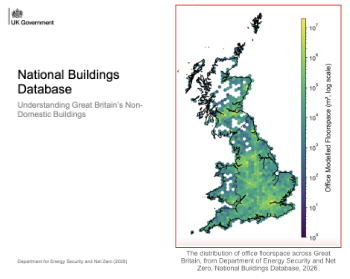
New UK National Buildings Database.
Building Safety Wiki Interviews

Chief executive of the British Woodworking Federation.
Planning condition discharge in England and Wales

A brief explanation from a building compliance expert, with further links.
Overheating guidance and tools for building designers

Guidance for dealing with element of building fabric control that have increasing importance.
Shading for housing, a design guide

From the Good Homes Alliance and British Blind and Shutter Association.
UK Standard Skills Classification (SSC)

A shared framework for describing skills needs.
Social media ban consultation comes to close

CIOB urges UK Government to consider social media’s role in careers guidance in ban debate.