





Clinker in construction
Broadly, clinker refers to a stony residue resulting from burning coal or from a furnace. It is a common component of aggregates, Portland cement, brickwork, blockwork, paving and so on.
Archaeological Evidence for Glassworking, Guidelines for Recovering, Analysing and Interpreting Evidence, published by Historic England in 2018, describes clinker as: ‘A fused material produced at high temperatures, here used to describe the waste from coal-fired glass furnaces.’
Low Carbon Concrete Routemap, Setting the agenda for a path to net zero, draft for consultation published by the Institution of Civil Engineers in 2021, defines clinker as: ‘A nodular material made by heating limestone and clay at a temperature of about 1,400C-1,500C. It is the basic ingredient of Portland cement, the one that confers hydraulic properties to cement.’
UK Concrete and Cement Industry, Roadmap to Beyond Net Zero, published by MPA UK Concrete in 2020, defines clinker as: ‘the principle constituent of cement, clinker is produced by heating raw materials such as limestone with other materials such as clay to 1450°C. Its manufacture is typically the most energy and emissions intensive part of cement and concrete production.’
The term ‘clinker built’ refers to a method of boat building in which the planks that make up the hull overlap. This is also referred to as lapstrake.
Its originates from the word 'clink' or 'clench', ie clenching together, or fusing.
[edit] Related articles on Designing Buildings
Featured articles
Check out some of the best features and news from Designing Buildings as well as key stories from around the web.

Your views needed - a strategy for the professions, trades and occupations.

Confronting competency, codes, capacity and costs.

The hidden risk in modern construction supply chains.
Construction Management, 10 June

24 months to 14: CITB launches accelerated apprenticeships.
Bridging the gap between clients and contractors

Concerns remain around contractor quality, capability, and delivery.
Construction Management, 10 June.

Heat pumps beat boilers in new home tests.
Building Safety Act implementation in Wales

CIAT to host industry panel on 26 June.
New and updated CLC building safety guidance.
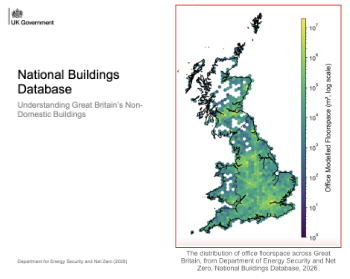
New UK National Buildings Database.
Building Safety Wiki Interviews

Chief executive of the British Woodworking Federation.
Planning condition discharge in England and Wales

A brief explanation from a building compliance expert, with further links.