





Back siphonage

|
| This backflow prevention device includes a valve assembly with isolation valves and strainer. |
Collins Complete Do-It-Yourself Manual was published in 1986. It was created for William Collins Sons & Co. Ltd. by Jackson Day and conceived by Jackson Day Jennings Ltd.
It defines back siphonage as: ‘The siphoning of part of a plumbing system caused by the failure of mains water pressure’.
The negative pressure (or vacuum) that results in back siphonage can happen under conditions such as a water mains break or an increased use of water for fire fighting or construction purposes. When the vacuum occurs and the supply pressure decreases, back siphonage causes the water flow (or other liquid substances) to reverse.
Back siphonage may result in contaminated water being pulled into the clean water supply. This action is referred to as backflow. Backflow can also take place due to back pressure, which can occur when there is higher pressure in the system than in its supply. This can happen in certain types of heating systems where the pressure is increased for some reason (such as thermal expansion in unvented systems).
[edit] Preventing back siphonage
Air gaps can be used to help prevent both back siphonage and backflow. An air gap is a cleared vertical space that is placed in a way that allows it to control the water supply. These gaps can be used to regulate the pressure.
An atmospheric vacuum breaker (or AVB) can be used to prevent back siphonage. It is a type of backflow prevention device that can be used in situations where it is not possible to create an air gap.
Water-using appliances must provide an acceptable degree of protection against backflow or back siphonage. These parameters are determined in BS 6280:1982 Method of vacuum (backsiphonage) test for water-using appliances. Recommendations are also proscribed under the Water Supply (Water Fittings) Regulations 1999.
[edit] Related articles on Designing Buildings
- Backflow.
- Mains water.
- Plumbing.
- Potable water.
- Siphon.
- Vacuum breaker.
- Warning pipe.
- Water consumption.
- Water Services Regulation Authority.
- Water Supply (Water Fittings) Regulations 1999.
[edit] External resources
Featured articles
Check out some of the best features and news from Designing Buildings as well as key stories from around the web.

Channel 4 broadcaster to host 125th anniversary ceremony.
Listed structures on the rail network
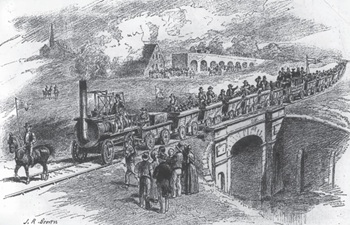
Heritage interests and operational requirements must be balanced.
Historic England publishes research into embodied carbon when retrofitting traditional buildings.
New Prime Minister delivers on ECA call for cut in electricity costs.

CIOB reacts to the announcement of Andy Burnham as Prime Minister.

Heritage and conservation science workforce survey - Have your say.
England's Suburbs 1820-2020. Book review.

New, more proportionate and targeted approach for higher-risk building assessments.
Government brings British Steel into public ownership.
UKCW Birmingham returns with bold new theme and focus.
New guidance published on competence requirements for self-certification schemes.
Construction Management, 8 July
NEETs crisis drives interest in trades, but apprenticeships barriers remain.