





Auction theory
Contents |
[edit] Introduction
Auction theory relates to the design of auctions and how this influences the bidding strategies of the parties taking part in the auction. Auctions take place in which different parties bid for the right to purchase goods or, in the construction industry, to win tender contracts for project work.
The four traditional types of auction are:
[edit] First-price sealed-bid
[edit] Second-price sealed-bid
- Bidders hand bids to the auctioneer. Upon opening, the most suitable bid wins, paying equal to the bid which is judged second-most suitable.
[edit] Open ascending-bid (English auctions)
[edit] Open descending-bid (Dutch auctions)
Generally, the tendering process within the construction industry is the first of the above – a first-price sealed-bid auction with multiple stages.
[edit] ‘Winner’s curse’
An element of auction theory, which can impact upon the construction industry, is the ‘winner’s curse’. This is when a bidding contractor wins the auction with a bid that is too low for them to make a satisfactory profit, if any at all.
However, while it is common for tendering processes to favour lowest bids, the construction industry does not operate on a strictly first-price sealed-bid basis, as other factors also come into play. An existing working relationship between employer and tenderer might give the latter an advantage over tenderers who are unfamiliar to the employer.
The employer might also be prepared to select a higher bid because there is an expectation of higher quality and reliability. It is just as important for the employer that the tenderer does not suffer the ‘winner’s curse’, since the project will be likely to be impacted negatively as a result of the tenderer trying to rush, cut costs or even become insolvent.
[edit] ‘Bid shopping’
The construction industry has obtained something of a bad reputation in the past for corrupting the first-price sealed-bid auction design. This is known as ‘bid shopping’.
A sealed-bid auction is intended to proceed with tenderers only knowing their bid and not those of their rivals. However, what can happen is that the employer reveals the bids of tenderers to their rivals in an attempt to drive bids down. This turns the design of the auction into more of an English auction, and puts tenderers at a disadvantage compared to the employer. One way of avoiding this in construction is for tenderers to withhold their bid submission until right before the deadline, in the hope that this will prevent their bid becoming common knowledge to rivals.
[edit] Other forms of corruption
Two other forms of corruption can arise in construction when it comes to sealed-bid auctions.
[edit] Bid rotation
This occurs when a number of tenderers are involved in the auction process but only one of them places a bid, inevitably making them the winner. The tenderers collude together to rotate the title of ‘winner’ among themselves, meaning they are each assured of winning (unrivalled) a certain amount of work.
[edit] Phantom bidding
This is more common and involves all bar one of the tenderers submitting artificially high bids, while the one tenderer submits a lower bid which is still sufficiently high to ensure they make a profit. This is designed to give the impression of competition.
[edit] Related articles on Designing Buildings Wiki
- Best value.
- Bidding tactics
- Bid strategies.
- Bid writer.
- Bidding for renovation works.
- Contract award.
- E-auction.
- E-sourcing.
- Game theory.
- Invitation to tender.
- Negotiated tendering.
- OJEU procurement rules.
- Open tendering.
- Procurement route.
- Reverse auction.
- Selection criteria.
- Selective tendering.
- The benefits of e-procurement in construction.
- Tender.
- Tender evaluation.
Featured articles and news
Costs and insolvencies mount for SMEs, despite growth

Construction sector under insolvency and wage bill pressure in part linked to National Insurance, says report.
The place for vitrified clay pipes in modern infrastructure
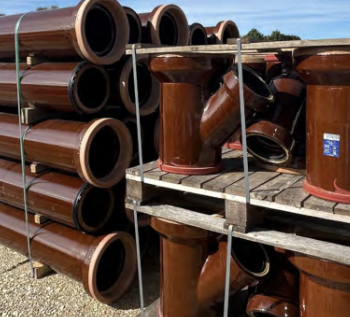
Why vitrified clay pipes are reclaiming their role in built projects.

Research by construction PR consultancy LMC published.
Roles and responsibilities of domestic clients

ACA Safety in Construction guide for domestic clients.
Fire door compliance in UK commercial buildings

Architect and manufacturer gives their low down.
Plumbing and heating for sustainability in new properties

Technical Engineer runs through changes in regulations, innovations in materials, and product systems.
Awareness of the Carbon Border Adjustment Mechanism
What CBAM is and what to do about it.
The new towns and strategic environmental assessments

12 locations of the New Towns Taskforce reduced to 7 within the new towns draft programme and open consultation.

Buildings that changed the future of architecture. Book review.
The Sustainability Pathfinder© Handbook
Built environment agency launches free Pathfinder© tool to help businesses progress sustainability strategies.

Government outcome to the late payment consultation, ECA reacts.
IHBC 2025 Gus Astley Student Award winners

Work on the role of hewing in UK historic conservation a win for Jack Parker of Oxford Brookes University.
Future Homes Building Standards and plug-in solar
Parts F and L amendments, the availability of solar panels and industry responses.
How later living housing can help solve the housing crisis

Unlocking homes, unlocking lives.
Preparing safety case reports for HRBs under the BSA
A new practical guide to preparing structural inputs for safety cases and safety case reports published by IStructE.
Male construction workers and prostate cancer

CIOB and Prostate Cancer UK encourage awareness of prostate cancer risks, and what to do about it.