





Angular selective shading systems

Contents |
[edit] Introduction
Angular selective shading systems are generally static, energy efficient window treatments that are suitable for new construction or retrofit projects. They block or filter direct sunlight while allowing diffuse daylight to pass through windows within a specific range. Static, angular selective shading systems offer a potentially low-cost option to reduce window heat gains and control glare while permitting the admission of useful daylight and access to views.
These passive systems are optically complex, designed to have characteristics that allow them to selectively assume different properties related to the transmission of light.
[edit] Types of angular selective systems
There are generally single and double layer systems. The single layer systems tend to manage visual glare through angular selective control but have moderately high transmittance in the near infrared and a high emittance. Two layer systems tend to offer low emittance and better solar control, but still offer good visible angular selectivity.
They can be made from a wide variety of materials and produced in a broad array of shapes, sizes and colours that can be installed at angles that preserve views (both in and out of windows), reduce solar heat gain and controlling glare and excessive light.
[edit] External
Examples include woven metal screens or punched metal scrims for building exteriors. In certain instances, these products can be mechanically manoeuvred (either manually or electronically) into the ideal position based on conditions and preferences.
[edit] Between pane
There are also between-pane options, including micro-louvred systems (in metal, fabric or mirrored materials) or highly reflective sculpted mesh. These systems tend to have wider application possibilities and may last longer than their exterior counterparts, with lower maintenance requirements, but they may not offer the same flexibility in terms of deployment.
They must also be designed in a manner that does not interfere with - or possibly damage - low-e window coatings. Low-e glass is a type of glass that has a coating added to one or more of its surfaces to reduce its emissivity so that it rejects a higher proportion of long-wave infra-red radiation.
[edit] Glass treatments
Angular selective fritted or etched glass is another method of reducing window heat gain while preserving the transmission of natural daylight.
There are also certain types of oblique thin metal and metal insulator coatings that can be spectrally selective. As a type of smart window system, these coatings are configured as a grating made from parallel strips of material. The strips serve to manage solar radiation through angular selective light transmission based on predefined preferences.
[edit] Related articles on Designing Buildings
Featured articles
Check out some of the best features and news from Designing Buildings as well as key stories from around the web.

New and updated CLC building safety guidance.
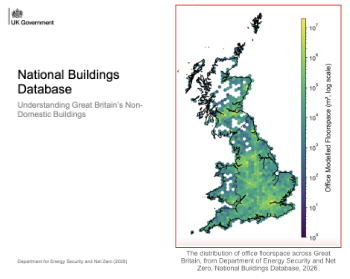
New UK National Buildings Database.
Building Safety Wiki Interviews

Chief executive of the British Woodworking Federation.
Planning condition discharge in England and Wales

A brief explanation from a building compliance expert, with further links.
Overheating guidance and tools for building designers

Guidance for dealing with element of building fabric control that have increasing importance.
Shading for housing, a design guide

From the Good Homes Alliance and British Blind and Shutter Association.
UK Standard Skills Classification (SSC)

A shared framework for describing skills needs.
Social media ban consultation comes to close

CIOB urges UK Government to consider social media’s role in careers guidance in ban debate.
The latest of eight Skills England apprenticeship units

The addition of battery manufacturing welcomed by ECA with a warning about the risks of fast-tracked apprenticeship units.
Building Control Independent Panel final report
A precis of a key report led by Dame Hackitt with full recommendations and link to the government response.
Building Safety recap April, 2026
A short and longer run-through of the month, with links to further information and sources.