





Exoskeleton

Contents |
[edit] Introduction
Very broadly, the term 'exoskeleton' refers to an external skeleton. In its traditional application, it describes the hard covering found on certain types of animals. It is also used to describe a wearable powered suit (or exosuit) that can be adapted as a mobile machine for industrial or medical purposes, and in relation to some built structures.

[edit] Exosuits and construction
As an exosuit, exoskeletons made from metal and outfitted with motorised “muscles” give wearers robotic strength. This innovation is already being used to help people with disabilities walk independently. It is also being tested on construction workers as a way to help them lift and move heavy objects without causing injury.
[edit] Exoskeletons and architecture
By picking up on the term’s connection with nature, exoskeleton buildings display a sense of biomimicry. In nature, the exoskeleton is an animal’s external armour that protects its internal systems. An exoskeleton serves a similar function in architecture. The building’s exoskeleton performs certain roles - ranging from structural to thermal - while protecting and supporting its internal systems.
In architectural and engineering applications, an exoskeleton approach is sometimes used for skyscrapers. It is a construction approach that places key components of a building on the exterior of the structure.
Instead of being covered by cladding or other surface materials, an exposed exoskeleton showcases the technical aspects of the building by putting them on display. In some instances, mechanical and engineering systems are incorporated into the exoskeleton.
One of the advantages of an exoskeleton is that it can free up interior space that would otherwise be required for columns and other structural supports. This creates an extremely flexible floorplan that can be easily adapted. Placing bracing and trusses on the outside of the building can also create an innovative and industrial aesthetic effect.
However, it can create complex exteriors that are difficult to clean and maintain.

|

|
| Lloyd's of London | HSBC Hong Kong |
[edit] Related articles on Designing Buildings
Featured articles
Check out some of the best features and news from Designing Buildings as well as key stories from around the web.
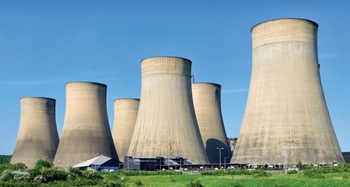
The heritage of nuclear and conventional power stations.
New measures to stop people being ripped off

Government to protect families from cowboy builders and aggressive bailiffs.

New Futurebuild showcase brings an innovation-first approach.
National Planning Policy Framework
Understanding the 2026 changes.
ECA's public affairs priorities

Member consultation opens to shape priorities for 2027 to 2030.

Dutyholder responsibilities from 1 July 2026.
Where performance meets practice

The Building Envelope Stage at UKCW Birmingham.

CIAT publishes briefing on planning reforms.
Leaders in Learning for Practice Network

Call for conservation leaders in learning to register interest in new network.
The importance of early engagement

Construction lessons from the Trillium HealthWorks Experience Centre.
Mayors are to be given planning call in powers
Mayors across England will be able to make the most important planning decisions.

The Master Builder: William Butterfield and his times. Book review.
Comments