





Types of pad foundation
Contents |
[edit] Introduction
Pad foundations are a form of spread foundation formed by rectangular, square, or sometimes circular concrete ‘pads’ that support localised single-point loads such as structural columns, groups of columns or framed structures. This load is then spread by the pad to the bearing layer of soil or rock below. Pad foundations can also be used to support ground beams.
There are several different types of pad foundation:
[edit] Plain concrete

Plain concrete pad foundations that do not use reinforcement are an economical solution but only where the applied load will be relatively light. These can also be referred to as footings. The general rule is that the depth of the pad should be equal to the distance from the face of the vertical element to the edge of the pad on both sides.
[edit] Reinforced concrete

The addition of reinforcement allows for relatively wide but shallow pad foundations. In order to make the reinforcing cage easier to construct and place, the pads tend to be designed as a square plan area. The reinforced concrete base is designed to span in one direction, with the main bars longitudinal in the bottom.
Where the width of the base is restricted or where there is eccentric/inclined loading, rectangular pads can be designed.
[edit] Combined column foundations

These are where two pad foundations are combined into a longer one and can be used where the outer column is close to a site boundary or existing wall. The purpose is that the balancing effect of the internal column can be incorporated. The plan shape is usually a rectangle.
[edit] Continuous pad

This is where the pad foundations are combined together as a single long structural element. This is often the case where the pads and the columns they support are closely spaced. By extending the reinforcement between the pads, differential settlement can be resisted and longitudinal stiffness can be improved.
Foundations that cover the entire footprint of a building are generally referred to as 'raft foundations'.
[edit] Pad and ground beam

This is similar to a continuous pad but differs in that smaller isolated pads are connected by ground beams. This helps to improve structural rigidity.
[edit] Find out more
[edit] Related articles on Designing Buildings Wiki
Featured articles
Check out some of the best features and news from Designing Buildings as well as key stories from around the web.
Bridging the gap between clients and contractors

Concerns remain around contractor quality, capability, and delivery.
Construction Management, 10 June.
Heat pumps beat boilers in new home tests.
Building Safety Act implementation in Wales

CIAT to host industry panel on 26 June.
New and updated CLC building safety guidance.
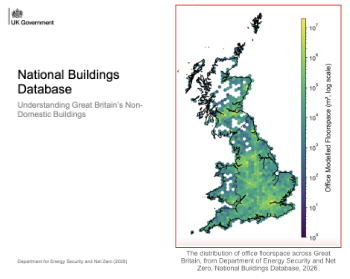
New UK National Buildings Database.
Building Safety Wiki Interviews

Chief executive of the British Woodworking Federation.
Planning condition discharge in England and Wales

A brief explanation from a building compliance expert, with further links.
Overheating guidance and tools for building designers

Guidance for dealing with element of building fabric control that have increasing importance.
Shading for housing, a design guide

From the Good Homes Alliance and British Blind and Shutter Association.
UK Standard Skills Classification (SSC)

A shared framework for describing skills needs.
Social media ban consultation comes to close

CIOB urges UK Government to consider social media’s role in careers guidance in ban debate.