





Agent of change

|
Contents |
[edit] Overview
The Agent of Change principle places the responsibility for mitigating impacts from existing noise-generating activities or uses on the proposed new noise-sensitive development. In other words, the person or business responsible for the change must also be responsible for managing the impact of the change. So for example, if housing is going to be built near an existing music venue, it is the responsibility of the housebuilder or developer to ensure the new dwellings incorporate appropriate noise attenuation measures.
‘Agent of change’ is a principle that has been promoted by the live music industry as a means of protecting venues from closure.
Local authorities have tended to favour complaints from residents in new developments over noise levels from established music venues in the vicinity. This has been cited as a major factor in venues closing in large numbers in recent years. In London alone, 35% of live music venues closed between 2007 and 2015. It is proposed that the principle of ‘agent of change’ is triggered automatically when a new planning application is made.
In the reverse circumstances, where a new music venue is proposed near an existing residential building, then the ‘agent of change’ – the music venue – would need to ensure it included appropriate measures to reduce noise.
This is different from the current position which holds that whoever is reported as making a nuisance is always responsible for that nuisance. This position is held irrespective of how long the 'nuisance' has existed, historic instances of the same noise being a nuisance, or whether someone has moved into the vicinity of the noise in full knowledge of it.
The principle has been successfully trialled in Australia.
[edit] Updates
In April 2016, the UK’s Housing and Planning Bill was passed into law which included an amendment that states developers are required to seek prior approval on noise impacts before changing the use of a site to residential dwellings. While this legislation does not introduce the agent of change principle, it has been said to mark a step-change in planning law, allowing local planning authorities to consider noise impacts on new residents from existing businesses within the area.
The principle does not allow for consideration of management issues, which can have a significant impact on noise nuisance. A previously well-managed venue that did not cause nuisance can, for example, become a problem because of doors being left open or poor management of closing time.
In January 2018, it was announced that planning rules would be strengthened to protect music venues and neighbours. The National Planning Policy Framework will be clarified at some point to include a specific mention of the 'agent of change' principle.
Housing Secretary Sajid Javid said:
"I have always thought it unfair that the burden is on long-standing music venues to solve noise issues when property developers choose to build nearby. That’s why I consulted on this in February [2017] as part of the Housing White Paper. I am pleased to finally have an opportunity to right this wrong and also give more peace of mind to new residents moving into local properties."
[edit] Related articles on Designing Buildings Wiki
- Asset of community value.
- Building acoustics.
- Control of Noise at Work Regulations 2005.
- Licence to alter.
- Licensing buildings.
- Neighbourhood planning.
- Noise nuisance.
- Planning condition.
- Property development and music.
- Sound insulation.
- Sound v noise.
[edit] External resources
- Music Venue Trust - What is agent of change and why is it important?
Featured articles
Check out some of the best features and news from Designing Buildings as well as key stories from around the web.
Grenfell investigation files passed to CPS

Angela Rayner apologises on behalf of the British state.

Electrical contractors need to understand the practical implications.

The real barrier to getting more value from digital technology.

Your guide to The Construction Reset at UKCW Birmingham.

Accommodating the Victorian and Edwardian working woman. Book review.
Rethinking passive fire protection in design

PFP demands the same level of design rigour as structure or services.

38% of Gen Zs feel safe when a fire door is wedged open.
Stunning images from around the world

Shortlist for CIOB’s Art of Building photography competition.

Guidance for conversion of traditional pre-1919 stone buildings.
Industrial heritage in the Ruhr
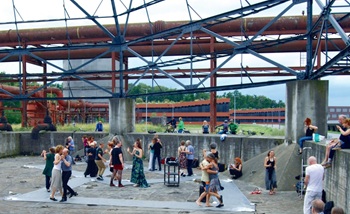
A marked difference to the fate of industrial landscapes in the UK.

Communities will be able to build their own clean energy.
Why diversity and inclusion matters for SMEs

CIOB’s D&I Charter shows how practical changes can support long-term growth.