





Wiest-Levy method
Contents |
[edit] Introduction
The Wiest-Levy method is a critical path method (CPM) based on the deterministic or exact duration of each task. CPM was developed by Morgan R Walker of the Engineering Services Division at Du Pont, and James E Kelley, who worked at Remington Rand. Walker and Kelly were interested in improving scheduling techniques used in the construction of industrial plants.
The Wiest-Levy method is a practical approach to problem solving that can be applied to ecision making. It sets out a way of deciding which jobs or activities involved in a complex project are higher priority (or critical) based on their overall impact. It also attempts to devise the ideal schedule for all jobs and resources required to meet time and budget targets.
[edit] History
Named after the American academics, Jerome D Wiest and Ferdinand K Levy, the Wiest-Levy method was introduced in the mid-1960s. A third collaborator, Gerald L Thompson was also involved in the development of this technique used to analyse, plan and schedule large, complex projects.
When applied to resource allocation and other aspects of project management in construction, this method helps to optimise the sequence of activities. Wiest created a concept called SPAR (Scheduling Program for Allocating Resources) which can be used for scheduling projects that have limited resources.
In the case of non-critical activities, the one that solves the problem with the least delay is chosen. If there are two activities with the same conditions, the one with the greatest leeway is delayed first, meaning that critical activities are only delayed when there is no other option.
For more information see: Critical path method.
[edit] Related articles on Designing Buildings Wiki
- Critical path method CPM.
- Progress of construction works.
- Resource leveling.
- Resource allocation in design and construction.
- Scheduling construction activities.
[edit] External resources
- F K Levy, G L Thompson and J D Wiest, Harvard Business Review, The ABCs of the Critical Path Method (September 1963).
Featured articles and news
The future workforce: culture change and skill

Under the spotlight at UK Construction Week London.

A landmark moment for postmodern heritage.
A safe energy transition – ECA launches a new Charter

Practical policy actions to speed up low carbon adoption while maintaining installation safety and competency.
Frank Duffy: Researcher and Practitioner
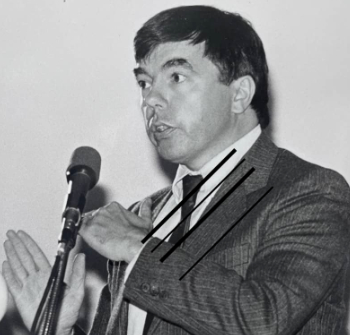
Reflections on achievements and relevance to the wider research and practice communities.
The 2026 Compliance Landscape: Fire doors

Why 'Business as Usual' is a Liability.
Cutting construction carbon footprint by caring for soil

Is construction neglecting one of the planet’s most powerful carbon stores and one of our greatest natural climate allies.
ARCHITECTURE: How's it progressing?

Archiblogger posing questions of a historical and contextual nature.
The roofscape of Hampstead Garden Suburb

Residents, architects and roofers need to understand detailing.
Homes, landlords. tenants and the new housing standards

What will it all mean?
The Architectural Technology podcast: Where it's AT

Catch-up on the latest episodes.
Edmundson Apprentice of the Year award 2026

Entries now open for this Electrical Contractors' Association award.

Traditional blue-grey slate from one of the oldest and largest UK slate quarries down in Cornwall.

There are plenty of sources with the potential to be redeveloped.
Change of use legislation breaths new life into buildings

A run down on Class MA of the General Permitted Development Order.
Solar generation in the historic environment

Success requires understanding each site in detail.