





Twin cities

Contents |
[edit] Introduction
The term twin cities (or metroplex) refers to a metropolitan area that is made up of two anchor cities in close proximity and of nearly equal size and significance. The term encompases their suburbs, which may merge into each other over time. Twin cities sometimes originate with the construction of an airport that serves both anchor cities and the surrounding suburbs.
Associated with American terminology (although used around the world), twin cities is similar to the international term, urban agglomeration, and the British term, conurbation. However, modern twin cities preserve their individual identities, unlike those associated with a conurbation, ‘which refers to a region comprising a number of cities, large towns and other urban areas that, through population growth and physical expansion, have merged to form one continuous urban and industrially developed area.'
Twin cities are not to be confused with twin towns or sister cities, which are agreements made between municipalities located in different parts of the world. These arrangements are made to encourage an understanding between cultures and sometimes serve as the basis for international economic cooperation.
[edit] Distinguishing characteristics
While twinned cities are joined by proximity and size, they may not share the same demographic or political characteristics. People who live in twin cities may prefer being identified as residents of their anchor city, although they may live in one anchor city and work in another.
There are some historic instances where the individual cities grew into each other and lost their separate identities. For instance, Buda and Pest were individual cities in Hungary that united in 1873 to become Budapest.
[edit] Boundaries
In the case of Buda and Pest, the Danube river separated the two original cities. Geographic elements (such as waterways) and political boundaries (such as state or international borders) are sometimes disregarded by twinning cities.
Examples of international twin cities include:
- Detroit, Michigan (US) and Windsor, Ontario (Canada)
- Niagara Falls, New York (US) and Niagara Falls, Ontario (Canada)
- San Diego, California (US) and Tijuana, Baja California (Mexico)
[edit] Twin cities around the world
There are many twin cities around the world. Some include:
[edit] United Kingdom
- Bournemouth and Poole
- Brighton and Hove
- Leeds and Bradford
[edit] North America
- Dallas and Fort Worth, Texas (sometimes referred to as Metroplex)
- Kitchener-Waterloo, Ontario
- Minneapolis and St Paul, Minnesota
- Raleigh and Durham, North Carolina
- San Francisco and Oakland, California
- Scranton and Wilkes-Barre, Pennsylvania
- Tampa and St Petersburg, Florida
[edit] Other international twin cities
- Bangkok and Nonthaburi, Thailand
- Cairo and Giza, Egypt
- Hyderabad and Secunderabad, Telangana state, India
- Kyoto and Otsu, Japan
- Tel Aviv and Jaffa, Israel
[edit] Related articles on Designing Buildings
Featured articles
Check out some of the best features and news from Designing Buildings as well as key stories from around the web.
Building Safety Act implementation in Wales

CIAT to host industry panel on 26 June.
New and updated CLC building safety guidance.
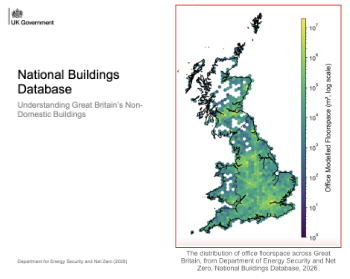
New UK National Buildings Database.
Building Safety Wiki Interviews

Chief executive of the British Woodworking Federation.
Planning condition discharge in England and Wales

A brief explanation from a building compliance expert, with further links.
Overheating guidance and tools for building designers

Guidance for dealing with element of building fabric control that have increasing importance.
Shading for housing, a design guide

From the Good Homes Alliance and British Blind and Shutter Association.
UK Standard Skills Classification (SSC)

A shared framework for describing skills needs.
Social media ban consultation comes to close

CIOB urges UK Government to consider social media’s role in careers guidance in ban debate.
The latest of eight Skills England apprenticeship units

The addition of battery manufacturing welcomed by ECA with a warning about the risks of fast-tracked apprenticeship units.
Building Control Independent Panel final report

A precis of a key report led by Dame Hackitt with full recommendations and link to the government response.