





Temporary flooring options
If you’re faced with an uneven ground surface and don’t want to go to the expense of having a permanent base laid for a temporary solution, there are a number of temporary flooring options.
The budget option is to have a plastic portable floor (similar to those used at festivals and events to create pathways), which simply lays to your existing surface like this one which was installed at the temporary cruise line baggage hall at Liverpool.

This system works well on level surfaces and is capable of withstanding 2.5tonne forklift trucks. It’s also very quick to install and relatively cheap to hire.
The biggest downside with this type of floor is it can lift in extreme heat (which we don’t get a lot of in the UK) and of course, if you get any water ingress due to sloping ground, the water will run across the top of the portable floor.
A better option can be a ‘heavy-floor’ system which is designed to level the ground and has the added benefit of acting as the base for the temporary building, so there is no need to penetrate the ground to anchor the building into place.

The image above, shows a temporary building installed on top of a ‘heavy-floor’ on a grassed area.
These are used extensively when temporary buildings are supplied to power stations and oil refineries when they are used as site workshops and offices.
It can also be used for car show rooms and retail areas as seen here, at a temporary Pret-A-Manger coffee lounge.

The best feature of this floor is that as it is a sub-structure system, it lifts the entire building off the existing ground surface, so any water runs underneath and it guarantees a level surface.
It is limited in its weight baring capacity to 500kg’s m² so it is not feasible to use it for fork lift trucks or heavy palletised goods.
It is possible to run a pump truck across it, so providing fork lift access is not needed, this floor system is a very fast and effective way to create a solid level base, when the existing ground surface is either too uneven or there is only a grassed or hardcore area.
In some situations a raised concrete base might be better, but if the intention is only to use the temporary building for a few months, as opposed to years, then a new concrete base would probably be cost prohibitive.
Author bio: Sophia writes for Smart Space, Britain’s leading specialist in flexible building solutions since 1985.
[edit] Related articles on Designing Buildings
Featured articles
Check out some of the best features and news from Designing Buildings as well as key stories from around the web.
Bridging the gap between clients and contractors
Concerns remain around contractor quality, capability, and delivery.
Construction Management, 10 June.
Heat pumps beat boilers in new home tests.
Building Safety Act implementation in Wales
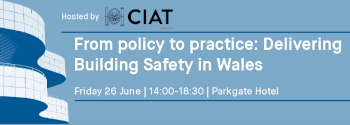
CIAT to host industry panel on 26 June.
New and updated CLC building safety guidance.
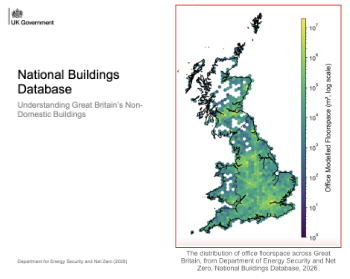
New UK National Buildings Database.
Building Safety Wiki Interviews

Chief executive of the British Woodworking Federation.
Planning condition discharge in England and Wales

A brief explanation from a building compliance expert, with further links.
Overheating guidance and tools for building designers

Guidance for dealing with element of building fabric control that have increasing importance.
Shading for housing, a design guide

From the Good Homes Alliance and British Blind and Shutter Association.
UK Standard Skills Classification (SSC)

A shared framework for describing skills needs.
Social media ban consultation comes to close

CIOB urges UK Government to consider social media’s role in careers guidance in ban debate.