





Tax relief 2012 2013
For more recent rates, see Tax relief.
Tax Relief describes a situation in which an individual or company's liability to tax is reduced as a result of an entitlement to claim allowances or offset certain permitted expenditures against income.
Contents |
[edit] Individuals
Individuals are entitled to personal allowances which provide tax relief by reducing taxable income. They can also obtain tax relief if they are able to utilise other allowances which HM Revenue and Customs permit in certain circumstances.
[edit] Personal Allowances
These are set by HM Government and usually change each financial year to take account of changes in the cost of living. From time to time however these allowances may remain unchanged for a longer period of time. Depending upon the particular circumstances of each individual, the amount of the allowance is free from assessment to tax. The level of personal allowance depends upon age and also income.
For 2012/13 Personal Allowance:
- under 65 years of age £8,105
- 65 - 74 £10,500
- 75 and over £10,660
If an individual's income exceeds £100,000 the amount of the allowance reduces by £1 for every £2 income exceeds £100,000. Thus it can be seen that at an income level of £116,210 the allowance for an individual under 65 disappears completely. Equally the higher allowances for older individuals are gradually reduced in much the same way as is the case for the basic personal allowance above £100,000. For 2012/13 the age related allowances begin to reduce at a rate of £1 for every £2 of earnings above £25,400 per annum. Married Couples Allowance of £7,705 (for 2012/13) is available where one partner is at least 75 years of age in the financial year in question. Married Couples Allowance provides tax relief at 10% thus reducing tax payable by £770.50.
[edit] Pension Contributions
Individuals may obtain tax relief by contributing to personal or occupational pensions schemes with a view to building up a fund to provide income in retirement. Contributions made in this way entitle the individual to tax relief at their marginal rate of tax. For a 40% taxpayer therefore, tax relief of £20,000 may be obtained against a contribution of £50,000.
There are detailed rules and limits governing pension schemes and amounts that may be contributed, more details of which are available from HM Revenue and Customs.
[edit] Gift Aid/Deeds of Covenant
Tax relief is available to support charitable giving. For a U.K. taxpayer the amount of the gift is deemed to be net of basic rate tax. In "grossing up" the value of the gift, relief is obtained at the taxpayers marginal rate. At the same time, the recipient of the gift can reclaim the basic rate of tax deducted at source.
[edit] Enterprise Investment Schemes (EIS)
Tax relief is also available to individuals who are prepared to invest in new businesses. The EIS pemits relief of 30% on the investment into shares in approved companies upto a maximum of £500,000. Thus maximum tax relief of £150,000 is available if the investor has sufficient taxable income against which the EIS relief can be set. There is also a carry - back provision which permits the tax relief to be set against income tax liability arising in the tax year immediately prior to the year in which the share acquisition is effected. Shares must be held for a mnimum of three years otherwise the tax relief granted will be withdrawn.
[edit] Companies
Companies and non-incorporated businesses obtain tax relief by setting business running costs against income. They can also obtain relief by claiming capital allowances when they purchase assets for use in their businesses.
[edit] Find out more
[edit] Related articles on Designing Buildings Wiki
- Budget.
- Capital allowances.
- Business case.
- Business plan
- Business rates.
- Cashflow.
- Cash flow forecast.
- Financial management tools.
- Funding options.
- Housing Grants, Construction and Regeneration Act.
- PAYE.
- Research and development tax relief.
- Scheme for Construction Contracts.
- Tax relief.
- VAT
- VAT - Option to tax (or to elect to waive exemption from VAT).
- VAT - Protected Buildings.
Featured articles and news
Costs and insolvencies mount for SMEs, despite growth

Construction sector under insolvency and wage bill pressure in part linked to National Insurance, says report.
The place for vitrified clay pipes in modern infrastructure
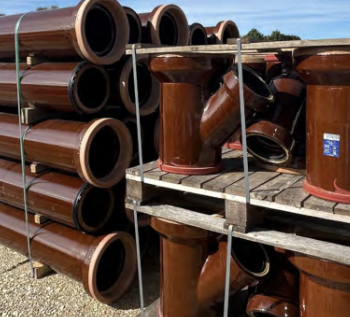
Why vitrified clay pipes are reclaiming their role in built projects.

Research by construction PR consultancy LMC published.
Roles and responsibilities of domestic clients

ACA Safety in Construction guide for domestic clients.
Fire door compliance in UK commercial buildings

Architect and manufacturer gives their low down.
Plumbing and heating for sustainability in new properties

Technical Engineer runs through changes in regulations, innovations in materials, and product systems.
Awareness of the Carbon Border Adjustment Mechanism
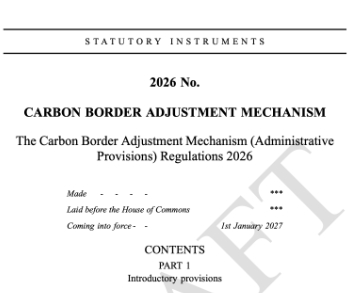
What CBAM is and what to do about it.
The new towns and strategic environmental assessments
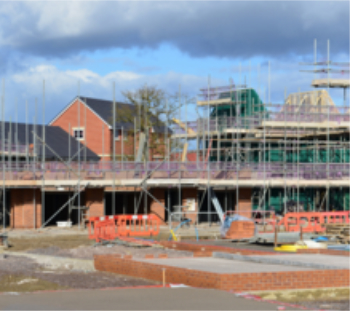
12 locations of the New Towns Taskforce reduced to 7 within the new towns draft programme and open consultation.

Buildings that changed the future of architecture. Book review.
The Sustainability Pathfinder© Handbook
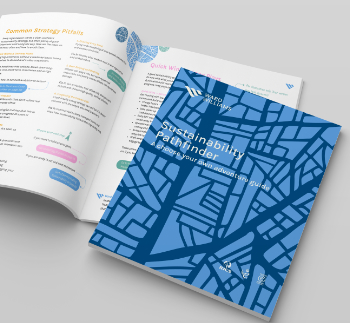
Built environment agency launches free Pathfinder© tool to help businesses progress sustainability strategies.
Government outcome to the late payment consultation, ECA reacts.
IHBC 2025 Gus Astley Student Award winners

Work on the role of hewing in UK historic conservation a win for Jack Parker of Oxford Brookes University.
Future Homes Building Standards and plug-in solar
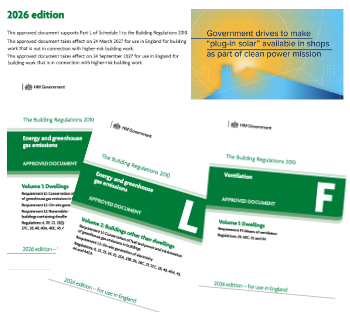
Parts F and L amendments, the availability of solar panels and industry responses.
How later living housing can help solve the housing crisis
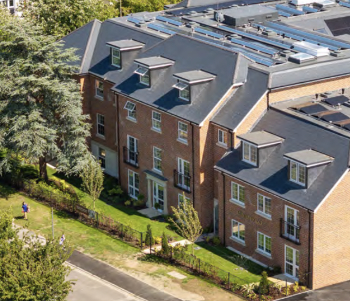
Unlocking homes, unlocking lives.
Preparing safety case reports for HRBs under the BSA
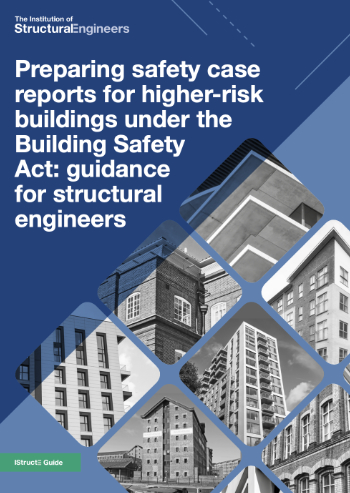
A new practical guide to preparing structural inputs for safety cases and safety case reports published by IStructE.
Male construction workers and prostate cancer

CIOB and Prostate Cancer UK encourage awareness of prostate cancer risks, and what to do about it.