





Peak demand
Peak demand: ‘Refers to the times of day when our electricity consumption is at its highest which, in the UK, occurs between 5-30pm to 6pm each weekday evening.’ Ref Climate Emergency Design Guide: How new buildings can meet UK climate change targets, published by the London Energy Transformation Initiative (LETI) in January 2020.
Zero carbon building, Performance standard, Version 2, Published by the Canada Green Building Council in March 2021, defines Peak demand as: ‘The building’s highest electrical load requirement on the grid, measured and reported in kW, reflecting any peak shaving impacts from demand management strategies including onsite renewable energy and energy storage.’
Planning our electric future: a White Paper for secure, affordable and low-carbon electricity, Glossary, published by the Department of Energy & Climate Change on 14 July 2011, suggests that peak load and peak demand are: ‘…used interchangeably to denote the maximum power requirement of a system at a given time, or the amount of power required to supply customers at times when need is greatest. They can refer either to the load at a given moment (e.g. a specific time of day) or to averaged load over a given period of time (e.g. a specific day or hour of the day).’
The RIBA Passivhaus Overlay, published by the RIBA in 2022, defines Peak Load (PL) as: ‘The heating load which has to be satisfied on either the coldest or cloudiest day of the year. Normally stated as W/m^2.’
[edit] Related articles on Designing Buildings
- Climate Emergency Design Guide.
- Electrical energy.
- Electrical equipment.
- Electrical installation.
- Electrical power.
- Electrical safety.
- Electrician.
- Electricity bill.
- Electricity consumption.
- Electricity supply.
- Glossary of electrical terms.
- London Energy Transformation Initiative.
- Plug load control.
- What is diversity in HVAC systems?
Featured articles
Check out some of the best features and news from Designing Buildings as well as key stories from around the web.
Undervaluing our industrial past

Heritage value changes as taste for building styles changes.
Changing expectations around competence and compliance

New information sheet from CIAT.
Grenfell investigation files passed to CPS

Angela Rayner apologises on behalf of the British state.

Electrical contractors need to understand the practical implications.

The real barrier to getting more value from digital technology.

Your guide to The Construction Reset at UKCW Birmingham.

Accommodating the Victorian and Edwardian working woman. Book review.
Rethinking passive fire protection in design

PFP demands the same level of design rigour as structure or services.

38% of Gen Zs feel safe when a fire door is wedged open.
Stunning images from around the world

Shortlist for CIOB’s Art of Building photography competition.

Guidance for conversion of traditional pre-1919 stone buildings.
Industrial heritage in the Ruhr
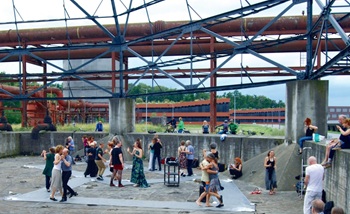
A marked difference to the fate of industrial landscapes in the UK.
Comments
[edit] To make a comment about this article, or to suggest changes, click 'Add a comment' above. Separate your comments from any existing comments by inserting a horizontal line.