





Disrepair
A definition of disrepair is based on the former Decent Homes Standard criteria which states that a dwelling fails this if it is not in a reasonable state of repair. This is based on the dwelling age and condition of a range of building components including walls, roofs, windows, doors, electrics and heating systems. Ref Making a Difference, Housing and Health: A Case for Investment, published by BRE and Public Health Wales NHS Trust on 19 June 2019.
The Scottish House Condition Survey (SHCS) suggests there are four levels of disrepair; basic, critical, urgent and extensive.
- Any (or Basic) disrepair is the minimum threshold of disrepair and relates to any damage where a building element requires some repair however minor, beyond routine maintenance.
- Critical elements disrepair refers to ‘…disrepair to building elements central to weather-tightness, structural stability and preventing deterioration of the property.’
- Urgent disrepair relates to situations requiring immediate repair to prevent further damage or health and safety risk to occupants.
- Extensive disrepair must cover at least 20% or more of the building element area.
Ref The economic, social and environmental benefits of stimulating repairs and improvements to the Scottish built environment to aid a green recovery from Covid-19, February 2021, Fraser of Allander Institute, University of Strathclyde Business School.
See also: Repair.
[edit] Related articles on Designing Buildings
- A measure of net well-being that incorporates the effect of housing environmental impacts.
- Calculating compensation for property damage.
- Decent homes standard.
- Defective premises and freeholder liabilities.
- Dilapidations.
- Property disrepair and landlord liabilities
- Quantifying the health benefits of the Decent Homes programme FB 64.
- Repair.
- Repairs and optional improvements.
- Schedule of condition.
- Substantial disrepair.
- The cost of poor housing to the NHS.
- The cost-benefit to the NHS arising from preventative housing interventions (FB82).
- The full cost of poor housing in Wales. May 2019
- The full cost of poor housing. May 2016
- The real cost of poor housing.
- What's the condition of your housing stock?
Featured articles
Check out some of the best features and news from Designing Buildings as well as key stories from around the web.
Undervaluing our industrial past

Heritage value changes as taste for building styles changes.
Changing expectations around competence and compliance

New information sheet from CIAT.
Grenfell investigation files passed to CPS

Angela Rayner apologises on behalf of the British state.

Electrical contractors need to understand the practical implications.

The real barrier to getting more value from digital technology.

Your guide to The Construction Reset at UKCW Birmingham.

Accommodating the Victorian and Edwardian working woman. Book review.
Rethinking passive fire protection in design

PFP demands the same level of design rigour as structure or services.

38% of Gen Zs feel safe when a fire door is wedged open.
Stunning images from around the world

Shortlist for CIOB’s Art of Building photography competition.

Guidance for conversion of traditional pre-1919 stone buildings.
Industrial heritage in the Ruhr
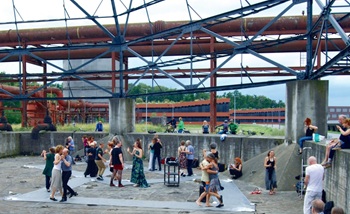
A marked difference to the fate of industrial landscapes in the UK.
Comments
[edit] To make a comment about this article, or to suggest changes, click 'Add a comment' above. Separate your comments from any existing comments by inserting a horizontal line.