






Building Up Ireland: professional insights from the construction sector in 2023
Contents |
[edit] Forward
This report provides a snapshot of the unique aspects of Ireland and Northern Ireland's construction industry, offering valuable insights into market trends, regulatory frameworks, and future prospects. The report serves as a useful resource for understanding the changing nature of construction sector in Ireland and Northern Ireland and the potential it holds for sustainable economic advancement.
The report focuses on the short, medium, and long term challenges facing the sector, and makes a series of policy recommendations on the basis of the data gathered.
[edit] Introduction (extract from report)
Ireland’s emergence from the 2008 financial crisis has been a long process. Consecutive years of cuts to public spending and increases in income and other taxes depressed economic activity in the crisis’ aftermath. The construction sector was the hardest hit of all, concurrently reeling from the effects of a burst housing bubble. A massive shedding of jobs led to a major loss of skills and experience. People with knowledge built up from years of training and working in the sector could no longer find employment, and many emigrated. Unsurprisingly, when the economy eventually began to recover the sector had a hard time in meeting the demands that were being placed on it (TASC & CIOB, 2021).
The picture for construction in Ireland in 2023 is quite different. With the sector having experienced a resurgence over the last decade and a remarkable bounce back since COVID-19, there is once again high demand for construction, driven largely by infrastructure and non-residential building. Dovetailing with Ireland’s National Development Plan, the continual demand for development means the Government has an opportunity to put in place a long-term pipeline of projects to secure an historically economically cyclical sector.
It is, therefore, essential that working in construction remains an attractive career path. In a world of declining manufacturing employment and the increase of often precarious and poorly paid service jobs, construction work offers a path to improved living standards. At a macro level, it facilitates social mobility. Despite advances elsewhere in the world of work, women remain a minority group in the sector, and the latest year of data shows a considerable drop compared to the previous year (CSO, 2021). However, in 2019, the sector recorded the highest share of women in construction in at least two decades at 7% of workers compared to 4% in 2000. With the world much changed since 2008, and the likelihood of an even more different one post-Covid, the future path of construction work is yet to be tread.
[edit] Executive Summary (extract from report)
This report begins with an economic snapshot of Ireland and Northern Ireland’s construction sectors using data sets from the Central Statistics Office (CSO), the Office of National Statistics (ONS), and Eurostat. While the data suggests the sector is on a secure footing in both Ireland and Northern Ireland, the industry may face contrasting fortunes in each country based on the respective states of Ireland and Northern Ireland’s economies. Following that, expert views gathered during a roundtable discussion with senior members of the CIOB covering short, medium, and long-term challenges facing the construction sector are presented. Themes arising include viability, the policy environment, the pool of labour, and the need for diversity in the sector. The report concludes with a series of policy recommendations based on the data presented.
This article is based on the CIOB research post and report of the same name "Building Up Ireland: Professional insights from the construction sector in 2023" dated, May 30, 2023.
--CIOB
[edit] Related articles on Designing Buildings
Featured articles
Check out some of the best features and news from Designing Buildings as well as key stories from around the web.

Why construction can't afford to ignore the skills gap.
Building Safety Regulator, 19 August

Gill Kernick appointed Independent Chair of Residents’ Panel.
Connecting knowledge, technology and conservation
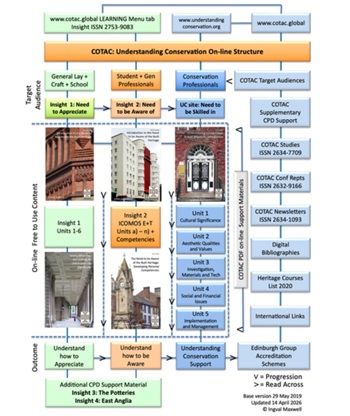
Building competence for the future of built heritage.
Building Regulations and Building Safety Act

CIOB publishes free advice for non-domestic clients.

Building Safety Newsletter from MHCLG.
An extraordinary record of steel engineering worldwide.

Households living near new pylons to save on bills.

ECA warns growth must not outpace grid capacity or skills.
The role of the client and decision making

CIOB response to built environment professions call for evidence.
Construction's sustainability reporting revolution
Tracking upfront embodied carbon with digital tools.
ECA welcomes procurement reforms

Public spending must back British jobs and skills.
Campaigning for Edinburgh: the Cockburn Association 1875-2049

The role of the civic voice in protecting character. Book review.
Comments
[edit] To make a comment about this article, click 'Add a comment' above. Separate your comments from any existing comments by inserting a horizontal line.