





St Jude-on-the-Hill Church

After Storm Barney, in November 2015, knocked the weathervane off the spire of Sir Edwin Lutyens’ St Jude-on-the-Hill Church in Hampstead Garden Suburb, it became clear that the tower was unstable and needed repairs.
Funds were raised for this essential work, but it was only one part of a wider programme of increasingly urgent structural and conservation works required.
Until recently the church, lacking a congregation sufficient to provide for its repair needs and for the cost of a vicar, was threatened with closure. The Grade-I church remains on the building-at-risk register, and after unsuccessful bids for grants from the National Lottery Heritage Fund in 2015 and 2016, the team is bracing for fresh fundraising, grant applications and support. Repairs to the church’s roof and its foundations demand immediate attention, while further investment is needed for the supporting facilities, the fine organ and the restoration of the wall paintings.
St Jude was designed by Lutyens starting in 1908 as the centrepiece of the garden suburb, the model community conceived by Henrietta Barnett in 1907. Its tower sits at the suburb’s highest point, the Central Square framed by The Institute (now the Henrietta Barnett School), the Free Church and both churches’ residences, the vicarage and the manse, all designed by Lutyens. The way forward may be in building on this as a campus.
Lutyens adopted a lightweight, thin-wall and hollow-box form of construction, probably to reduce the deadload of material on the foundations, which are on clay. Its bricks, of an unusual size, were specially commissioned. When the removal of a fractured brick enabled the architects to see inside the hollow-box construction, it turned out that the brickwork of the tower was without cross bonding or cross-ties. The returns at the sides of the hollow-box corners are constructed on stacked half bricks, which were not bonded into the corner flanks.
The lack of bonding meant that it was an inherently weak structure, highly vulnerable given its exposure to prevailing winds. Steeplejacks and scaffolding were needed for the work. The approved recipe for the restoration work’s lime mortar was as close as possible to Lutyens’ original: 3.5 natural hydraulic lime with grey additive, Bath stone dust and a number 28 sand mix. All materials for this work were supplied by the Cornish Lime Company.
Significantly damaged, it was necessary to replace the cockerel finial with a lighter equivalent. The finial’s ball alone was 53 kilos of Douglas fir. The near-replica is an exemplar of design and craftsmanship. The original finial did not go to salvage but, skilfully re-assembled, stands heroically inside the church.
This year the church will also begin a major project to restore its famous and extensive scheme of murals by Walter Starmer (1877–1961). Painted mainly over a 10-year period from 1920, using the spirit fresco technique, the murals cover most of the interior. The Courtauld will provide on-site restoration training, and the church is bidding from trusts to help meet the £700,000 cost. A rare survival for its date, the scheme has been hailed as a key part of the church’s unique aesthetic. It is certainly the largest complete collection designed by a single artist in the interwar years.
At the heart of the garden suburb’s community, St Jude has strong musical interests and good acoustics. Choral scholarships have been run at the church for nearly a decade and there is an annual programme of Proms at St Jude. Its cathedral-like splendour makes it a chosen venue for film, recording and events.
The Lutyens Trust and Lutyens Trust America are working with the minister, the Rev Emily Kolltveit, and the growing fabric team at St Jude, headed by David White. The Lutyens Trust is a society dedicated to promoting the preservation of Lutyens designs, his collaborative work, and the spirit and substance of his heritage. It is not a source of grants. It works to inform, research and engage, including support for those responsible for Lutyens’ buildings.
This article originally appeared as ‘Restoration plans for Lutyens’ garden suburb church’ in the Institute of Historic Building Conservation’s (IHBC’s) Context 184, published in June 2025.
--Institute of Historic Building Conservation
Related articles on Designing Buildings Conservation.
IHBC NewsBlog
IHBC sponsors Gardens Trust event 23-4 Sept 2026
.jpeg)
'Learning from the Past, Shaping the Future’ takes place in Milton Keynes
Renovations to Frank Lloyd Wright's Fallingwater complete
.jpg)
World Heritage Preserved project opens house for tours again
Shakespeare Birthplace Trust places Hall's Croft on HAR Register
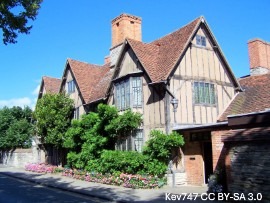
Stratford-upon-Avon home of Shakespeare's daughter is 'At Risk'
Lady Grange’s House repaired on St Kilda
.jpg)
National Trust for Scotland repairs stone cleit with link to famous island resident
Griff Rhys Jones on BBC Radio 4 Today programme
,_Green_Lane,_Derby.jpg)
The Victorian Society’s President unveiled its latest Top Ten Endangered Buildings 2026.
Need a MATE? Book your place now.

IHBC offers free webinars on applying for IHBC accreditation (Full & Associate).
UK Stained Glass Repository finds windows new homes
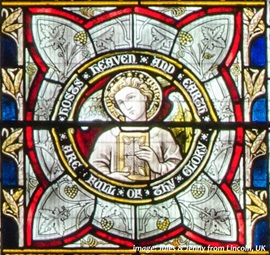
How are stained glass windows are rescued, stored and repurposed?
APPGEBE report sets high aims for quality
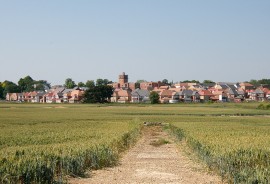
'Government must not sacrifice quality in drive to build 1.5m homes'
New measures protect Historic Shipwrecks from heritage crime

Underwater cultural heritage benefits from new HE guidance
How could the City of London skyline look in 6 years' time?

Visualisation shows approved planning applications as completed buildings
National Trust for Scotland calls for VAT cuts
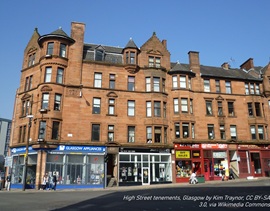
Heritage neglect is encouraged by current policies
IHBC's 'Context' Issue 186 features Industrial Heritage

IHBC's members' journal reports on the challenges of conserving infrastructure
Book now for IHBC Annual School 2026

IHBC Annual School is taking place 18-20 June 2026 in Newcastle
RICHeS Research Infrastructure offers ‘Full Access Fund Call’
RICHeS offers a ‘Help’ webinar on 11 March
Latest IHBC Issue of Context features Roofing
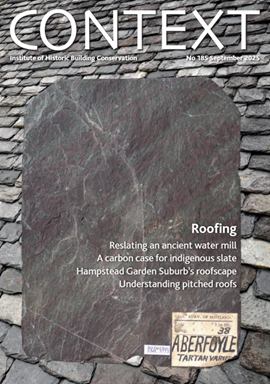
Articles range from slate to pitched roofs, and carbon impact to solar generation to roofscapes
Three reasons not to demolish Edinburgh’s Argyle House

Should 'Edinburgh's ugliest building' be saved?
IHBC’s 2025 Parliamentary Briefing...from Crafts in Crisis to Rubbish Retrofit
IHBC launches research-led ‘5 Commitments to Help Heritage Skills in Conservation’
How RDSAP 10.2 impacts EPC assessments in traditional buildings

Energy performance certificates (EPCs) tell us how energy efficient our buildings are, but the way these certificates are generated has changed.