





SPAB Magazine Winter 2023
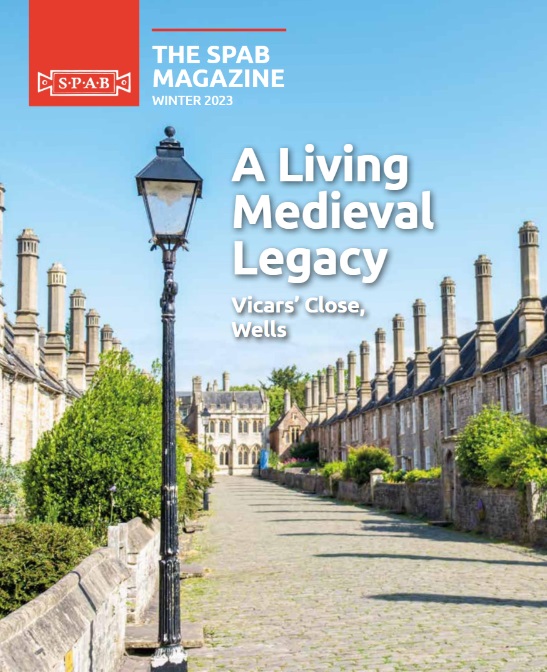
In reviewing publications for IHBC, some frustration about the speed and efficiency of the heritage development management regime is frequently detected in reports on casework by the national amenity societies. This column does not customarily review such casework, but the latest issue of the SPAB Magazine (Winter 2023) in particular provides a reminder of the frustrations surrounding timely, appropriate and succinct advice. This is made clear regarding a proposal for 5–6 Market Place, Whitby.
Without discussing the merits or otherwise of the case, the society makes clear three factors that present difficulty in providing a timely and appropriate response: a lack of sufficient information to fully understand the significance of the building; the potential impact of the proposals and the extent to which proposals would result in harm; and a lack of clear and convincing justification for such harm. These clear concerns recur frequently in other cases spread across the statutory societies and should cause pause for thought among both proponents of proposals and those in the heritage management system charged with evaluation and recommendations for decisions. None of this will be new, but the lack of analysis and interpretation highlighted by the society continues to undermine the current heritage regime.
It is pleasing to note that the SPAB Magazine is rejuvenating its technical feature with an explanation and analysis of aspects of repair and materials that have not received such detailed treatment there recently. Particular note should be made of an article of no fewer than eight pages by Stafford Holmes about ‘British Hydraulic Lime: a medieval inheritance and a call for its revival’. The author explores the historic use of British natural hydraulic lime and argues for its reintroduction as a local and sustainable material critical to good building conservation.
Holmes points out that research and development of hydraulic limes and natural cements progressed rapidly in the 19th century, that building materials terminology was not consistent and changed over time and by locality. In that era, and indeed earlier, ‘cement’ referred to mixes with binders of hydraulic lime or hydraulic lime and pozzolan. The term was also used for various adhesives that today would be known as glues and gums. Early literature confirming the location and chemical analysis of limestone hydraulic lime can be found under the titles of ‘cement’ and/or ‘concrete’. Henry Reed’s Practical Treatise on Concrete (1869) identified some of the quarries and analysis of the limestone used for hydraulic lime.
Holmes is also helpful on the question of specifications and the long-standing practice of British architects and engineers to specify hydraulic lime for mortars, renders and lime concrete, going back to Batty Langley’s Builder’s Complete Assistant (1738). Joseph Moxon’s Mechanick Exercises or the Doctrine of Handy-Works (1703) describes the choices to be made between limestone producing lime for internal work and that for exposed external finishes. Readers will need to be familiar with the complexity of how material was not only described but also used.
Holmes provides an extensive list of further reading. He concludes by proposing four actions to address the present absence of British natural hydraulic lime production and use. First, develop low-cost, small-scale, regional hydraulic lime production in conjunction with the reuse of local materials for the appropriate conservation and repair of historic buildings. Second, amend or rewrite national standards for building limes to include all traditional British hydraulic limes. Third, UK limestone producers and Portland cement manufacturers should designate part of their quarries and reintroduce suitable plans to produce hydraulic line for mortars and renders in place of cement for conservation, repair and new build. Finally, develop technologies to manufacture British building limes from local limestone and, to an appropriate small scale, to meet specialist demand.
The use of appropriate lime products sometimes seems to confuse the inexperienced. This accessible, well-illustrated and digestible introduction will be well worth reading.
This article originally appeared in the Institute of Historic Building Conservation’s (IHBC’s) Context 179, published in March 2024.
--Institute of Historic Building Conservation
Related articles on Designing Buildings
IHBC NewsBlog
IHBC sponsors Gardens Trust event 23-4 Sept 2026
.jpeg)
'Learning from the Past, Shaping the Future’ takes place in Milton Keynes
Renovations to Frank Lloyd Wright's Fallingwater complete
.jpg)
World Heritage Preserved project opens house for tours again
Shakespeare Birthplace Trust places Hall's Croft on HAR Register
Stratford-upon-Avon home of Shakespeare's daughter is 'At Risk'
Lady Grange’s House repaired on St Kilda
.jpg)
National Trust for Scotland repairs stone cleit with link to famous island resident
Griff Rhys Jones on BBC Radio 4 Today programme
,_Green_Lane,_Derby.jpg)
The Victorian Society’s President unveiled its latest Top Ten Endangered Buildings 2026.
Need a MATE? Book your place now.

IHBC offers free webinars on applying for IHBC accreditation (Full & Associate).
UK Stained Glass Repository finds windows new homes
How are stained glass windows are rescued, stored and repurposed?
APPGEBE report sets high aims for quality
'Government must not sacrifice quality in drive to build 1.5m homes'
New measures protect Historic Shipwrecks from heritage crime

Underwater cultural heritage benefits from new HE guidance
How could the City of London skyline look in 6 years' time?

Visualisation shows approved planning applications as completed buildings
National Trust for Scotland calls for VAT cuts

Heritage neglect is encouraged by current policies
IHBC's 'Context' Issue 186 features Industrial Heritage
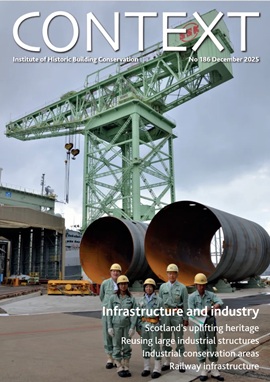
IHBC's members' journal reports on the challenges of conserving infrastructure
Book now for IHBC Annual School 2026
IHBC Annual School is taking place 18-20 June 2026 in Newcastle
RICHeS Research Infrastructure offers ‘Full Access Fund Call’

RICHeS offers a ‘Help’ webinar on 11 March
Latest IHBC Issue of Context features Roofing
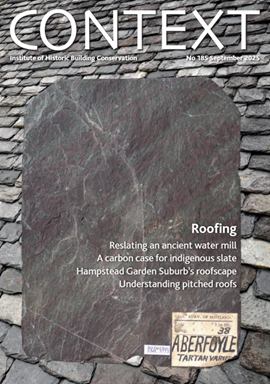
Articles range from slate to pitched roofs, and carbon impact to solar generation to roofscapes
Three reasons not to demolish Edinburgh’s Argyle House

Should 'Edinburgh's ugliest building' be saved?
IHBC’s 2025 Parliamentary Briefing...from Crafts in Crisis to Rubbish Retrofit
IHBC launches research-led ‘5 Commitments to Help Heritage Skills in Conservation’
How RDSAP 10.2 impacts EPC assessments in traditional buildings

Energy performance certificates (EPCs) tell us how energy efficient our buildings are, but the way these certificates are generated has changed.