





Rare earth metals
Rare earths are elements found in the Earth’s crust that are vital to many modern technologies, including consumer electronics, computers and networks, communications, clean energy, advanced transportation, health care, environmental mitigation, national defense, and many others.
Because of their unique magnetic, luminescent, and electrochemical properties, these elements help make many technologies perform with reduced weight, reduced emissions, and energy consumption; or give them greater efficiency, performance, miniaturisation, speed, durability, and thermal stability.
There are 17 elements that are considered to be rare earth elements (REE):
- yttrium
- lanthanum
- cerium
- praseodymium
- neodymium
- promethium
- samarium
- europium
- gadolinium
- terbium
- dysprosium
- holmium
- erbium
- thulium
- ytterbium
- lutetium
- scandium - found in most rare earth element deposits and sometimes classified as a rare earth element.
Rare earth metals are classified as:
- heavy rare earth metals (yttrium, gadolinium, europium, terbium, holmium, dysprosium, thulium, erbium, ytterbium, and lutetium)
- light rare earth metals (lanthanum, praseodymium, cerium, promethium, neodymium, and samarium).
The global rare earth metal market was valued at around USD 5.0 billion in 2014 and is expected to reach USD 9.0 billion in 2020, growing at a double digit CAGR between 2015 and 2020. In terms of volume, the global rare earth metal market stood at in 185 kilo tons 2014.
Rare earth metals and alloys that contain them are used in devices such as; computer memory, DVDs, rechargeable batteries, cell phones, catalytic converters, magnets, fluorescent lighting and many more.
The global demand for automobiles, consumer electronics, energy-efficient lighting, and catalysts is expected to rise rapidly over the next decade. Rare earth magnet demand is expected to increase, as is the demand for rechargeable batteries. New developments in medical technology are expected to increase the use of surgical lasers, magnetic resonance imaging, and positron emission tomography scintillation detectors.
Cerium oxide dominated the global rare earth metal market owing to strong demand from the catalyst market. Cerium oxide accounted for around 40% of the total rare earth metal market in 2014. Lanthanum is expected to be the fastest growing segment of rare earth metal market due to the rapidly growing demand for rare earth metal in car batteries and electronics appliances. However, other products of rare earth metals like neodymium, samarium, promethium, europium, dysprosium etc., are also expected to see robust growth.
On the basis of applications rare earth metal market can be segmented as magnets, catalyst, metallurgy, ceramics, phosphors, glass, and polishing.
Magnets were the largest application market for rare earth metals and accounted for around 21% of the total rare earth metal volume consumed in 2014. Strong economical growth in emerging economies and support from governments has resulted in a rapid growth in manufacturing of high technology products like tablet computers, TVs, advanced military technology, nuclear batteries, laser repeaters, miniature, superconductors, numerous medical devices, and rechargeable batteries. This in turn is expected to drive the demand for rare earth metals, especially in Asia Pacific region, and in particular in China.
Rare earth metal market was dominated by Asia Pacific with over 75% share in total volume consumption in 2014. Asia Pacific was followed by North America and Europe. China dominated the production and consumption of rare earth metals. Strong demand from China, India, Japan and South Korea is expected to fuel growth of this industry in the years to come. The rare earth metals market in North America is mainly driven by strong demand from the defence industry, including; night-vision goggles, precision-guided weapons, communications equipment, GPS equipment, batteries and other electronic devices. Rare earth metals are key ingredients for making the very hard alloys used in armored vehicles and projectiles that shatter on impact.
Wind turbines are an important application rare earth metals in Europe.
The global rare earth metal market is highly competitive, with the presence of well-established global market participants. Arafura Resources, Alkane Resources Ltd., Avalon Rare Metals Inc., Quest Rare Minerals Limited, China Rare Earth Holdings Limited, Indian Rare Earths Limited, Lynas Corporation Limited, Great Western Minerals Group Ltd., Greenland Minerals & Energy Ltd., Rare Element Resources Ltd., Molycorp, Inner Mongolia Baotou Steel Rare Earth Hi-Tech Co, Frontier Rare Earths Limited are some of the key vendors in the market.
Featured articles and news
The future workforce: culture change and skill

Under the spotlight at UK Construction Week London.

A landmark moment for postmodern heritage.
A safe energy transition – ECA launches a new Charter

Practical policy actions to speed up low carbon adoption while maintaining installation safety and competency.
Frank Duffy: Researcher and Practitioner

Reflections on achievements and relevance to the wider research and practice communities.
The 2026 Compliance Landscape: Fire doors

Why 'Business as Usual' is a Liability.
Cutting construction carbon footprint by caring for soil

Is construction neglecting one of the planet’s most powerful carbon stores and one of our greatest natural climate allies.
ARCHITECTURE: How's it progressing?

Archiblogger posing questions of a historical and contextual nature.
The roofscape of Hampstead Garden Suburb
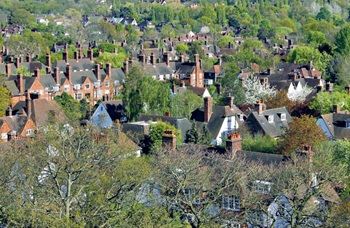
Residents, architects and roofers need to understand detailing.
Homes, landlords. tenants and the new housing standards

What will it all mean?
The Architectural Technology podcast: Where it's AT

Catch-up on the latest episodes.
Edmundson Apprentice of the Year award 2026

Entries now open for this Electrical Contractors' Association award.
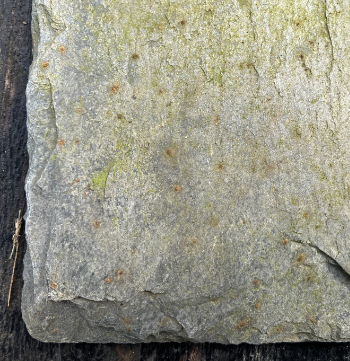
Traditional blue-grey slate from one of the oldest and largest UK slate quarries down in Cornwall.
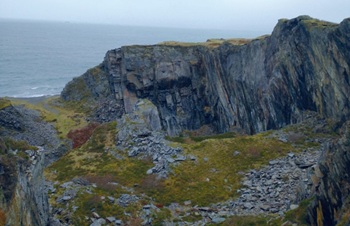
There are plenty of sources with the potential to be redeveloped.
Change of use legislation breaths new life into buildings

A run down on Class MA of the General Permitted Development Order.
Solar generation in the historic environment
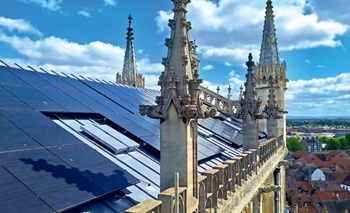
Success requires understanding each site in detail.