





Peak oil

|
Contents |
[edit] Introduction
The term 'peak oil' denotes the moment in time when domestic or global oil production peaks and will forever afterwards go into decline. Peak oil is therefore the point of maximum oil production.
[edit] Predictions
One of the earliest peak oil predictions came in 1956 from American Shell Oil geologist, M. King Hubbert, who pointed out that US oil production would peak around 1970. He was later proved correct by both the National Academy of Sciences and the Energy Information Agency (EIA). Hubbert subsequently generated much concern when he predicted a global peak oil date of 1975. However, this proved to be incorrect, as global oil production rose steadily to 2015.
Ever since Hubbert, there has been much research and debate and many government studies about when peak oil will occur: the International Energy Agency (IEA) for instance, gave its peak oil prediction as 2008 (ie the peak of conventional oil production). So far, numerous predictions have all turned out to be inaccurate, as oil production has continued to grow.
[edit] New technology
Peak oil depends not only on oil reserves but also available prices and technology. One reason it has proved so difficult to predict peak oil is because it is hard to know exactly what the available oil reserves are, given there are conventional sources of production (eg crude oil) and unconventional (shale oil). Twenty years ago, for example, it would have been very difficult to factor in the oil that might have been available from fracking which has allowed some regions such as North Dakota, US, to enjoy an oil production boom.
Given the movement towards alternative energy sources, it may be more relevant to talk of peak oil in terms of demand rather than of supply. Some oil analysts have argued that peak oil will be brought about by reduced demand, driven by increasingly expensive oil. Others have predicted that oil will become so expensive that fewer will have the means to pay for it.
[edit] Related articles on Designing Buildings Wiki
Featured articles and news

We're expanding our collaborative mission by launching DB Intelligence, an exclusive market research advisory panel. Built environment professionals can now get paid to share their expertise on industry trends, products and services.
Panel members receive direct financial incentives for participating in research projects like short surveys, 1-2-1 interviews and focus groups. Register today to shape the future of the construction sector.
Building Control Independent Panel final report
A precis of a key report led by Dame Hackitt with full recommendations and link to the government response.
Guide to ISO 19650 for Architecture Firms (2026)
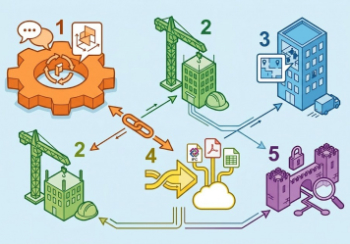
A user gives their low down.

A UK training and membership provider for mould remediation professionals.
Building Safety recap April, 2026

A short and longer run-through of the month, with links to further information and sources.
CIAT May 2026 briefing.

Independent NSI and BAFE study exploring how organisations are changing the way they buy fire safety services.

From medieval scribes to modern word art.

ECA welcomes crackdown on late payment and push for clean energy, whilst CIOB seek fixed cladding removal timeframes.
Cyber Security in the Built Environment

Protecting projects, data, and digital assets: A CIOB Academy TIS.
Managing competence in the built environment

ITFG publishes new industry guide on how to meet the ICC principles.
The UK's campaign to reduce noise pollution: Mythbusting, articles and topic guides.