





Monocouche render
Monocouche comes from the French to mean single layer, monocouche render is was adopted in Europe to describe modern renders that differ from traditional lime or cement renders. In general monocouche renders use white ordinary Portland cement as a binder instead of the more commonly used grey ordinary Portland cement, this allows the render mix to be coloured with pigment more easily and thus only needing the one layer without painting.
Essentially the ingredients of Monocouche render are cement, sand, lime, and pigments often along with modifying admixtures like silica, mica, which help performance. Polymer admixtures like acrylic resin are also used and sometimes the render is referred to as polymer render, these can help improve resistance to staining and water ingress as well as flexibility against cracking which maybe be increased due to the single nature of the coat.
Some issues with such renders have been noted to be colouration due to UV exposure and in some cases hairline cracks, and because it is through coloured it can be difficult to repair. However some contractors may use a mesh over the first pass of the render, although it s a single layer product it is often applied in two passes, the mesh in the middle can help movement without cracking. Finally although water resistant, it is actually water proof per se, though this can depend much on the different manufacturer and the additives used.
[edit] Related articles on Designing Buildings
Featured articles
Check out some of the best features and news from Designing Buildings as well as key stories from around the web.

A quick introduction.
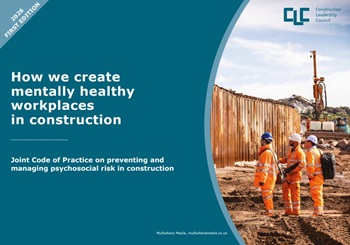
CLC publishes Mental Health Joint Code of Practice.
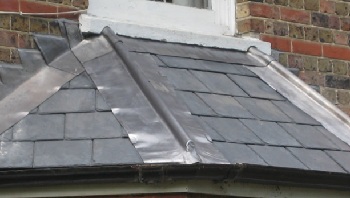
A quick introduction to its uses and risks.
Construction Management, 17 June

Government rolls out digital planning tool to all local authorities.

Your views needed - a strategy for the professions, trades and occupations.

Confronting competency, codes, capacity and costs.

The hidden risk in modern construction supply chains.
Construction Management, 10 June

24 months to 14: CITB launches accelerated apprenticeships.
Bridging the gap between clients and contractors

Concerns remain around contractor quality, capability, and delivery.
Construction Management, 10 June.

Heat pumps beat boilers in new home tests.
Building Safety Act implementation in Wales

CIAT to host industry panel on 26 June.