





Midland Expressway Ltd v Carillion Construction Ltd & Others
The case of Midland Expressway Ltd. v Carillion Construction Ltd., Alfred MacAlpine Construction Ltd., Balfour Beatty Group Ltd., AMEC Capital Projects Ltd., John E. Price (No.2) [2005] concerned the new M6 toll road construction near Birmingham and is important with regard to Private Finance Initiatives (PFIs) and Public Private Partnerships (PPPs).
The four defendant contractors worked together as a joint venture called CAMBBA. A concession agreement was granted in 1992 by the Secretary of State to Midland Expressway Ltd. (MEL) for them to design, construct and operate the M6 Toll Road. MEL and CAMBBA entered into a design and construct sub-contract in 2000.
‘Equivalent project relief’ provisions were contained within the sub-contract which limited the sub-contractor’s (CAMBBA) right to payment for variations and delay to the amount that MEL was able to recover from the Secretary of State. A mechanism that was intended to ensure this in the sub-contract restricted the subcontractor’s right to adjudicate an issue until a relevant adjudication had been brought between MEL and the Secretary of State.
As a result of variations, CAMBBA made claims for additional payment which, when they were disputed, CAMBBA wished to refer to adjudication. In response, MEL applied for a declaration and injunction preventing them from referring the claim to adjudication, arguing that the sub-contract did not provide them with any jurisdiction. The correct dispute, according to MEL, was between the Secretary of State and CAMBBA, as they were only a conduit between them.
CAMBBA argued that the ‘equivalent project relief’ and adjudication provisions in the subcontract cut across the statutory entitlement under the Housing Grants, Construction and Regeneration Act (HGCRA). Section 108 states that a subcontractor is entitled to commence an adjudication ‘at any time’. As the design and construct contract was a legitimate ‘contract’ under HGCRA, the dispute could be referred to adjudication.
The Technology and Construction Court (TCC) agreed with CAMBBA, and it was held that the adjudication provisions in the sub-contract were invalid. The ‘pay when paid’ aspect of the ‘equivalent project relief’ provisions was viewed as infringing section 113 of HGCRA which sought to guard against such clauses. Therefore, CAMBBA did not have to wait to be able to refer the dispute to adjudication.
Since previously, ‘equivalent project relief’ provisions had ensured that contractors were able to act as conduits for subcontractor claims without having liability, the repercussions of the case were that limiting the right to adjudication could no longer be used as a mechanism for meeting that objective.
[edit] Find out more
[edit] Related articles on Designing Buildings Wiki
Featured articles
Check out some of the best features and news from Designing Buildings as well as key stories from around the web.
Building Safety Newsletter from MHCLG.
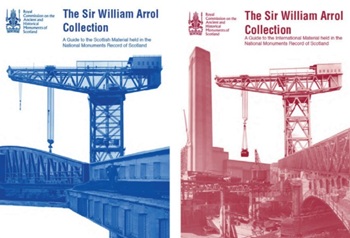
An extraordinary record of steel engineering worldwide.

Households living near new pylons to save on bills.

ECA warns growth must not outpace grid capacity or skills.
The role of the client and decision making

CIOB response to built environment professions call for evidence.
Construction's sustainability reporting revolution

Tracking upfront embodied carbon with digital tools.
ECA welcomes procurement reforms

Public spending must back British jobs and skills.
Campaigning for Edinburgh: the Cockburn Association 1875-2049
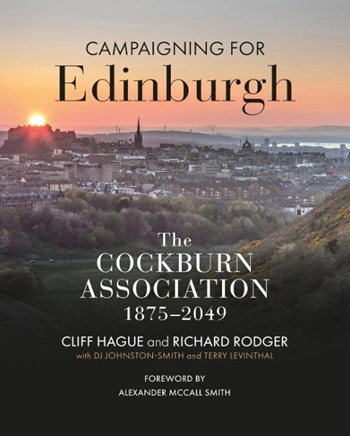
The role of the civic voice in protecting character. Book review.

CIOB photography competition is open for entries.
ECA Edmundson apprentice of the year award
Finalists announced.
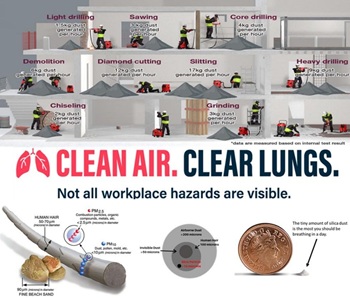
Major new study exposes serious knowledge gaps.

Generating energy from internal light as well as sunshine.