





Mean radiant temperature
All bodies exchange thermal radiation with their surroundings, depending on the difference in their surface temperatures and their emissivity. This radiant exchange is an important component of the thermal comfort that will be experienced by a person, particularly in places where there may be significant differences in radiant and air temperatures, for example, near a large window.
Other factors that influence thermal comfort include: environmental factors, such as air temperature, air velocity, relative humidity and the uniformity of conditions, as well as personal factors such as clothing, metabolic heat, acclimatisation, state of health, expectations, and even access to food and drink.

Mean radiant temperature (MRT) is a measure of the average temperature of the surfaces that surround a particular point, with which it will exchange thermal radiation. If the point is exposed to the outside, this may include the sky temperature and solar radiation.
The knowledge of surface geometries required to predict mean radiant temperature is very complex, particularly in elaborate spaces. However, mean radiant temperatures can be calculated by some proprietary software applications.
Mean radiant temperature can be measured using a globe thermometer. This is a hollow copper sphere painted matt black (to give it a high emissivity) with a temperature sensor at its centre.
From the temperature recorded, along with air velocity and air temperature (needed to account for convective heat exchange), the mean radiant temperature can be calculated:
MRT = globe temperature + 2.42 x air velocity in m/s (globe temperature – air temperature)
Note: This equation provides a very simplified rule of thumb. There are many different variations of this equation as it is dependent complex factors such as the size and emissivity of the globe thermometer. This particular example is taken from the Novalynx Corporation 2010, however, the units used in their equation appear to be incorrect, showing air velocity in cm/s rather than m/s. Thanks for pointing this out go to Dr Robert McLeod, Senior Lecturer Built Environment - Building Services Engineering, School of Environment and Technology at the University of Brighton.
[edit] Related articles on Designing Buildings Wiki
Featured articles and news
Guide to ISO 19650 for Architecture Firms (2026)

A user gives their low down.

A UK training and membership provider for mould remediation professionals.
Building Safety recap April, 2026

A short and longer run-through of the month, with links to further information and sources.
CIAT May 2026 briefing.

Independent NSI and BAFE study exploring how organisations are changing the way they buy fire safety services.

From medieval scribes to modern word art.

ECA welcomes crackdown on late payment and push for clean energy, whilst CIOB seek fixed cladding removal timeframes.
Cyber Security in the Built Environment
Protecting projects, data, and digital assets: A CIOB Academy TIS.
Managing competence in the built environment

ITFG publishes new industry guide on how to meet the ICC principles.

The UK's campaign to reduce noise pollution: Mythbusting, articles and topic guides.
Setting Expectations on Competence Management

Industry Competence Committee.
New Scottish and Welsh governments
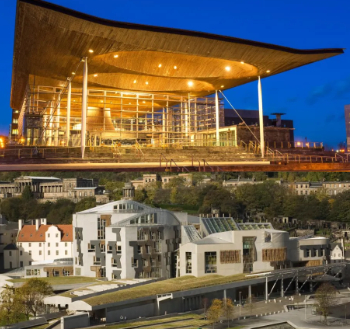
CIOB stresses importance of construction after new parliament elections.
The sad story of Derby Hippodrome
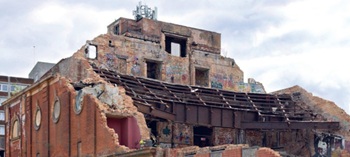
An historic building left to decay.

ECA, JIB and JTL back Fabian Society call to invest in skills for a stronger built environment workforce.

Women's Contributions to the Built Environment.
Calls for the delayed Circular Economy Strategy

Over 50 leading businesses, trade associations and professional bodies, including CIAT, and UKGBC sign open letter.
The future workforce: culture change and skill

Under the spotlight at UK Construction Week London.
A landmark moment for postmodern heritage.
Comments