





Market failure
The Green Book, Central Government Guidance On Appraisal And Evaluation, Published by HM Treasury in 2020, suggests: ‘Market failure occurs where, a market is unable to function fairly according to the economic ideas of efficient markets, from a Green Book perspective which looks beyond simply economic efficiency this means the market is unable to provide satisfactory levels of welfare efficiency.’
The 2018 Green Book stated that market failure is: ‘…where, for one reason or another, the market mechanism alone cannot achieve economic efficiency.’
The Industrial Decarbonisation Strategy published by HM Government in March 2021, states: ‘Market failure is where the market mechanism alone cannot achieve economic efficiency. Economic efficiency is achieved when nobody can be made better off without someone else being made worse off. Economic efficiency enhances social welfare by ensuring resources are allocated and used in the most productive manner possible. One potential cause of inefficiency is when the private returns to an individual or firm from carrying out a particular action or activity differs from the returns to society as a whole, meaning there are external costs or benefits.’
Global Warming of 1.5 ºC, Glossary, published by the Intergovernmental Panel on Climate Change (IPCC) in 2018, defines market failure as: ‘When private decisions are based on market prices that do not reflect the real scarcity of goods and services but rather reflect market distortions, they do not generate an efficient allocation of resources but cause welfare losses. A market distortion is any event in which a market reaches a market clearing price that is substantially different from the price that a market would achieve while operating under conditions of perfect competition and state enforcement of legal contracts and the ownership of private property. Examples of factors causing market prices to deviate from real economic scarcity are environmental externalities, public goods, monopoly power, information asymmetry, transaction costs and non-rational behaviour.’
[edit] Related articles on Designing Buildings
Featured articles and news
The future workforce: culture change and skill

Under the spotlight at UK Construction Week London.
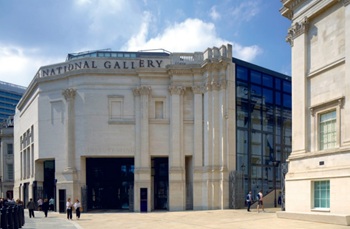
A landmark moment for postmodern heritage.
A safe energy transition – ECA launches a new Charter
Practical policy actions to speed up low carbon adoption while maintaining installation safety and competency.
Frank Duffy: Researcher and Practitioner
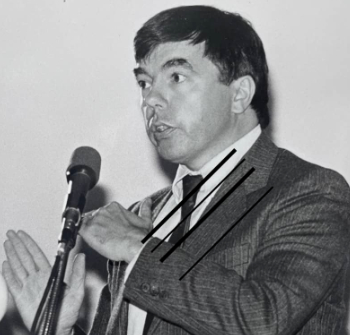
Reflections on achievements and relevance to the wider research and practice communities.
The 2026 Compliance Landscape: Fire doors

Why 'Business as Usual' is a Liability.
Cutting construction carbon footprint by caring for soil

Is construction neglecting one of the planet’s most powerful carbon stores and one of our greatest natural climate allies.
ARCHITECTURE: How's it progressing?

Archiblogger posing questions of a historical and contextual nature.
The roofscape of Hampstead Garden Suburb
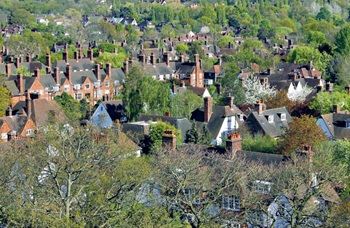
Residents, architects and roofers need to understand detailing.
Homes, landlords. tenants and the new housing standards
What will it all mean?
The Architectural Technology podcast: Where it's AT

Catch-up on the latest episodes.
Edmundson Apprentice of the Year award 2026

Entries now open for this Electrical Contractors' Association award.

Traditional blue-grey slate from one of the oldest and largest UK slate quarries down in Cornwall.

There are plenty of sources with the potential to be redeveloped.
Change of use legislation breaths new life into buildings

A run down on Class MA of the General Permitted Development Order.
Solar generation in the historic environment
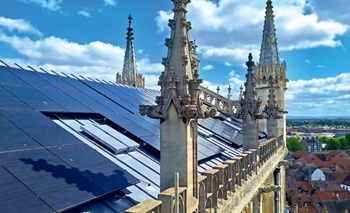
Success requires understanding each site in detail.