





Liquidated v unliquidated damages

Construction contracts generally include a provision for the contractor to pay liquidated damages (or liquidated and ascertained damages, sometimes referred to as LADs) to the client in the event that the contract is breached.
Liquidated damages are a pre-agreed amount of money that is set out in advance in the contract, that fixes the sum payable as damages if the contractor breaches the contract - typically by failing to complete the construction works by the completion date set out in the contract. Liquidated damages are typically calculated on a daily or weekly basis.
Unliquidated damages are damages that are payable for a breach, the exact amount of which has not been pre-agreed. The sum to be paid as compensation is said to be ‘at large’ and is determined after the breach occurs by a court.
One of the advantages of a liquidated damages is that there is no need to prove the actual loss since the clause provides a pre-estimate of the damages to be paid. In addition to helping recover damages, this helps to provide certainty to the parties.
The advantage of unliquidated damages is that it allows for recovery of losses which may have been impossible to foresee or to estimate with any certainty before the breach.
If the contract contains an applicable liquidated damages clause, the client is generally not permitted to disregard and claim unliquidated damages instead.
In standard form construction contracts, parties will sometimes insert ‘NIL’ or ‘n/a’ for the rate for liquidated damages, if they do not wish to claim liquidated damages, however, this can imply that losses for unliquidated damages are also nil. If parties wish to exclude liability for liquidated damages, they must state this clearly in the contract to avoid ambiguity, either stating that unliquidated damages apply, or deleting the clause altogether.
[edit] Related articles on Designing Buildings
- Breach of contract.
- Collateral warranty.
- Completion date.
- Damages in construction contracts.
- Dunlop Pneumatic Tyre Co Ltd v New Garage and Motor Co Ltd.
- Liquidated damages.
- Measure of damages.
- Penalty.
- Practical completion.
- The distinction between liquidated damages clauses and penalty clauses.
- Unliquidated damages.
Featured articles
Check out some of the best features and news from Designing Buildings as well as key stories from around the web.
Construction Management, 10 June

24 months to 14: CITB launches accelerated apprenticeships.
Bridging the gap between clients and contractors

Concerns remain around contractor quality, capability, and delivery.
Construction Management, 10 June.
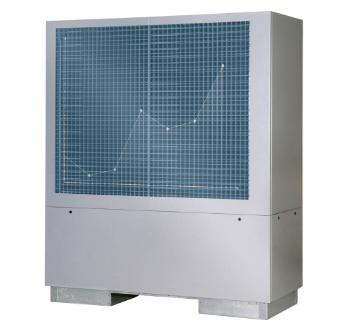
Heat pumps beat boilers in new home tests.
Building Safety Act implementation in Wales
CIAT to host industry panel on 26 June.

New and updated CLC building safety guidance.

New UK National Buildings Database.
Building Safety Wiki Interviews

Chief executive of the British Woodworking Federation.
Planning condition discharge in England and Wales

A brief explanation from a building compliance expert, with further links.
Overheating guidance and tools for building designers

Guidance for dealing with element of building fabric control that have increasing importance.
Shading for housing, a design guide

From the Good Homes Alliance and British Blind and Shutter Association.
UK Standard Skills Classification (SSC)

A shared framework for describing skills needs.