





Key qualities of springs

Contents |
[edit] Introduction
There are many different types of springs used throughout the design and engineering world, however, they all share common properties which make them perfect for projects. However, each spring can possess these properties in very different ways. Knowing how they do so is vital as these differences can vastly affect work.
What are the key qualities of springs that should be borne in mind when designing for a building project?
[edit] Torsion
Torsion is the twisting of an object as a result of torque being applied, in springs this allows them to store rotational energy. A torsion spring follows Hooke’s law, which states that force needed to extend a spring by some distance is proportional to this distance.
However, Hooke’s law must eventually fail once force exceeds a certain limit. Knowing what this limit is for particular needs becomes an integral part of any project.
This coiled spring was first used in door locks during the 15th century but soon became prominent in clock-making, as the first mechanical clock was also created that century with the help of springs.
Springs with high torsion ability can be used in clothes pins, cameras and a weight support for heavy moving objects like garage doors.
[edit] Compression
There are also spring with a distinctive helical shape capable of withstanding compressive forces. This is the most common spring type. A compression spring, when pushed by a load will always push back in order to try and reshape itself into its original form. Not only do they offer resistance to this force, but they also the most efficient way to store the energy received from this force.
When experiencing full load, the spring experiences stress and is in full torsion as a result. The stress is experienced more typically at the top of the spring, but operating stress is experienced throughout the spring depending on the spread of the load.
Installed at full stress in most cases, compression springs can take a significant amount of stress without experiencing damage.
Typically used in vehicle suspension, toys and spring mattresses or other areas that need to absorb impact.
[edit] Tension
Tightly wound coils designed to work with tension, these springs stretch to a certain length as the load is applied. The coils, when unloaded, are touching and only part when a load is applied. When the load pulls, the spring tries to return to its more compressed form and this causes the springing action until the force ceases and it returns to its original form.
One of the widest uses of all springs, found in industrial robots all the way to locks and trampolines.
[edit] Related articles on Designing Buildings Wiki
Featured articles and news

We're expanding our collaborative mission by launching DB Intelligence, an exclusive market research advisory panel. Built environment professionals can now get paid to share their expertise on industry trends, products and services.
Panel members receive direct financial incentives for participating in research projects like short surveys, 1-2-1 interviews and focus groups. Register today to shape the future of the construction sector.
Building Control Independent Panel final report

A precis of a key report led by Dame Hackitt with full recommendations and link to the government response.
Guide to ISO 19650 for Architecture Firms (2026)
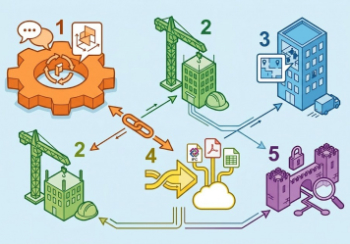
A user gives their low down.

A UK training and membership provider for mould remediation professionals.
Building Safety recap April, 2026

A short and longer run-through of the month, with links to further information and sources.

CIAT May 2026 briefing.

Independent NSI and BAFE study exploring how organisations are changing the way they buy fire safety services.

From medieval scribes to modern word art.

ECA welcomes crackdown on late payment and push for clean energy, whilst CIOB seek fixed cladding removal timeframes.
Cyber Security in the Built Environment

Protecting projects, data, and digital assets: A CIOB Academy TIS.
Managing competence in the built environment
ITFG publishes new industry guide on how to meet the ICC principles.
The UK's campaign to reduce noise pollution: Mythbusting, articles and topic guides.