






The Solaris House of Buckminster Fuller
Contents |
[edit]  Introduction

In 1927, Buckminster Fuller's youngest daughter, Alexandra, died of polio and spinal meningitis. The death of his daughter prompted him to design houses with a high level of sanitation and cleanliness.
[edit] Scope of house
In total, the Solaris House weighed three tonnes and provided 140 square metres of living space. The mechanics of the house used diagonal stretching and horizontal compression (similar to a bicycle wheel) based on resiliently flexible spring wire elements.
The mast of six support pipes and screw piles acted as a frame for the mesh shell suspended from the top of the mast. The building elements were suspended from above, rather than supported by supports from below, as in most residential buildings. Their load bearing system was very similar to that of a suspension bridge.
The design was as optimal as possible, ensuring that the stability and strength of the building did not require other supports and heavy foundations. A translucent multi-layer fabric membrane and a spring wire mesh shell provided protection from heat, cold and rain.
The house was designed so that it could be bought for the same price as a car. The building was conceived as a small, one-family house for mass production. It was designed in such a way that no part weighed more than 5 kg, and its assembly was possible with just three people. To reduce the weight and price of the Solaris house, elastic-flexible structural elements and spring steel assemblies were used. The use of steel spring wire ensures high structural strength and low weight.
[edit] Flexibility
The Solaris House could be highly resistant to wind, snow, earthquakes and floods due to the fact that all structural elements are resilient and flexible. The nodes are hinged and spring-loaded, so the structure of the house is able to change shape. without failing.
The spiral technology of the three-dimensional rotation of the spring wire loops and the tensile operation of the shells reduces the weight of the nodes and structures of the gridshells. Examples of the spiral technology of manufacturing elastic-flexible shell elements are described in "Folding frame of the gridshell", RF patent No. 2597417.
[edit] Heat, light and ventilation
The thickness of the thermal insulation of the Solaris House depends on the length of the hinged threaded rods in the attachment points of the shell elements that fix the position of the film layers.
Transparent coated inserts allow light to pass through, minimising the need for artificial lighting. Shading inside the Solaris home is provided by curtains and screens such as fleece and coloured prints.
Ventilation is delivered by a system of ventilation valves inside and on the surface of the membrane and along the central support. The support is held together by a prefabricated spiral staircase made of wood and steel fasteners.
In the centre there is a stacked chimney that provides thermal mass.
--Yuri 13:56, 10 Jan 2022 (BST)
[edit] Related articles on Designing Buildings
Featured articles
Check out some of the best features and news from Designing Buildings as well as key stories from around the web.
The importance of early engagement
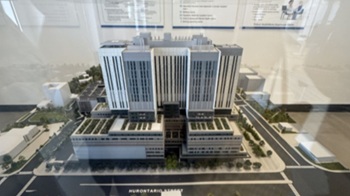
Construction lessons from the Trillium HealthWorks Experience Centre.
Mayors are to be given planning call in powers
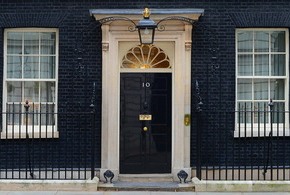
Mayors across England will be able to make the most important planning decisions.

The Master Builder: William Butterfield and his times. Book review.

Why construction can't afford to ignore the skills gap.
Building Safety Regulator, 19 August

Gill Kernick appointed Independent Chair of Residents’ Panel.
Connecting knowledge, technology and conservation
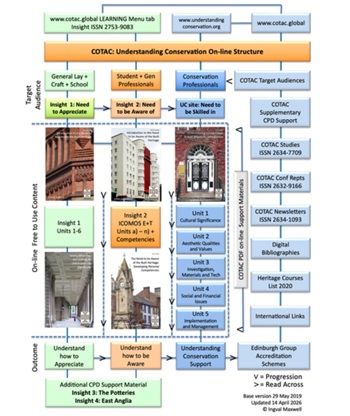
Building competence for the future of built heritage.
Building Regulations and Building Safety Act
CIOB publishes free advice for non-domestic clients.

Building Safety Newsletter from MHCLG.

An extraordinary record of steel engineering worldwide.
Households living near new pylons to save on bills.

ECA warns growth must not outpace grid capacity or skills.
The role of the client and decision making

CIOB response to built environment professions call for evidence.