





Equivalent project relief provisions
In private finance initiative (PFI) contracts, equivalent project relief (EPR) provisions offer a mechanism for contractors to enforce back-to-back risk transfer down the supply chain.
Also known as ‘EPR clauses’, they are used as overarching provisions in PFI contracts to preserve the liquidity of the PFI project company by ensuring the rights and obligations of the sub-contractor are tied to those of the PFI project company under the project agreement. This is intended to ensure that the entitlement of the sub-contractor will be no greater and no less than that of the PFI project company.
EPR provisions were often used a way of getting around the prohibited ‘pay-when-paid’ provision under the Housing Grants, Construction and Regeneration Act (HGCRA). However, this has been challenged in cases such as Midland Expressway Ltd v Carillion Construction Ltd & Others [2005]. As a result, EPR provisions are often quite elaborate and complex mechanisms which may, under scrutiny, be found to be unforceable if they are interpreted as undermining the purpose of HGCRA.
[edit] Related articles on Designing Buildings Wiki
Featured articles and news

We're expanding our collaborative mission by launching DB Intelligence, an exclusive market research advisory panel. Built environment professionals can now get paid to share their expertise on industry trends, products and services.
Panel members receive direct financial incentives for participating in research projects like short surveys, 1-2-1 interviews and focus groups. Register today to shape the future of the construction sector.
Building Control Independent Panel final report
A precis of a key report led by Dame Hackitt with full recommendations and link to the government response.
Guide to ISO 19650 for Architecture Firms (2026)
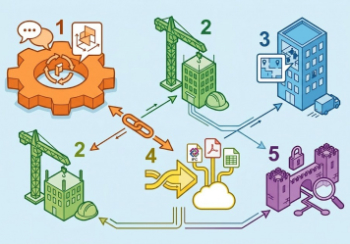
A user gives their low down.

A UK training and membership provider for mould remediation professionals.
Building Safety recap April, 2026
A short and longer run-through of the month, with links to further information and sources.

CIAT May 2026 briefing.

Independent NSI and BAFE study exploring how organisations are changing the way they buy fire safety services.
From medieval scribes to modern word art.

ECA welcomes crackdown on late payment and push for clean energy, whilst CIOB seek fixed cladding removal timeframes.
Cyber Security in the Built Environment
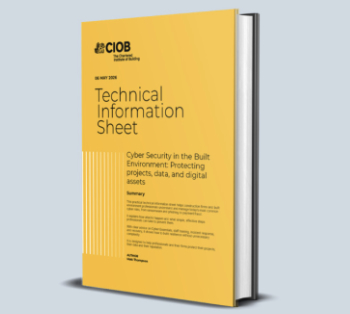
Protecting projects, data, and digital assets: A CIOB Academy TIS.
Managing competence in the built environment

ITFG publishes new industry guide on how to meet the ICC principles.
The UK's campaign to reduce noise pollution: Mythbusting, articles and topic guides.