





Enterprise model for infrastructure
Project 13 is an Institution of Civil Engineers (ICE) - led initiative to boost certainty and productivity in the delivery of infrastructure, to improve whole-life outcomes and to support a more sustainable, innovative, highly-skilled industry. It is a response to a general perception that the infrastructure sector’s current operating model is broken, with projects delivered over budget, over time and below par.
Project 13 proposes an 'enterprise model' rather than a traditional construction programme model in which:
- The owner is central and leads the enterprise, defining long-term value.
- Suppliers and advisors have direct relationships with the owner.
- An ‘integrator’ actively engages and integrates all tiers of the market.
- The key suppliers, owner, advisor and integrator work as one team to optimise value.
ICE suggest that this is different from the traditional construction programme model in that:
- Reward is based on value added to the overall outcomes, not service provided.
- There is a greater understanding of cost drivers and risk across all organisations, with commercial incentives for collaboration to jointly mitigate risk, not transfer it.
- Establishing a high-performing enterprise requires fundamentally different leadership, governance, behaviours and skills to succeed. This is underpinned by organisations with increasingly diverse skills and backgrounds.

In this context, an enterprise is defined as:
‘… an integrated organisation, aligned and commercially incentivised to deliver better outcomes for customers from infrastructure investment. Such organisations are characterised by sophisticated, maturing and typically longer-term relationships between owners, investors, integrators, advisors and suppliers. The roles, capabilities and behaviours of an enterprise differ from those in much of the construction industry today and success will be underpinned by developing organisations with increasingly diverse backgrounds and skill sets.’
The enterprise is led by the owner who manages and operates the asset(s) and leads in identifying the needs of the asset(s) and promoting them to the investor. The investor is an enabler of the enterprise concerned with affordability, societal and financial benefits derived from optimal management of the asset(s).
The owner has a direct relationship with the suppliers and advisors, facilitated by the integrator. The integrator brings in appropriate suppliers and advisors when they can best add value.
The suppliers and advisors are experts in their subject area, accountable for delivery of specific aspects of the enterprise.
Ref: P13 Blueprint, Institution of Civil Engineers, May 2018.
[edit] Find out more
[edit] Related articles on Designing Buildings Wiki
Featured articles and news
The future workforce: culture change and skill

Under the spotlight at UK Construction Week London.
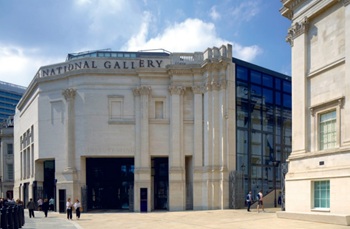
A landmark moment for postmodern heritage.
A safe energy transition – ECA launches a new Charter

Practical policy actions to speed up low carbon adoption while maintaining installation safety and competency.
Frank Duffy: Researcher and Practitioner
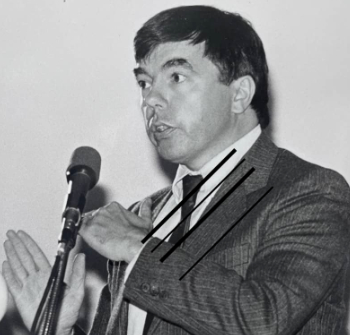
Reflections on achievements and relevance to the wider research and practice communities.
The 2026 Compliance Landscape: Fire doors

Why 'Business as Usual' is a Liability.
Cutting construction carbon footprint by caring for soil

Is construction neglecting one of the planet’s most powerful carbon stores and one of our greatest natural climate allies.
ARCHITECTURE: How's it progressing?
Archiblogger posing questions of a historical and contextual nature.
The roofscape of Hampstead Garden Suburb

Residents, architects and roofers need to understand detailing.
Homes, landlords. tenants and the new housing standards

What will it all mean?
The Architectural Technology podcast: Where it's AT

Catch-up on the latest episodes.
Edmundson Apprentice of the Year award 2026

Entries now open for this Electrical Contractors' Association award.

Traditional blue-grey slate from one of the oldest and largest UK slate quarries down in Cornwall.
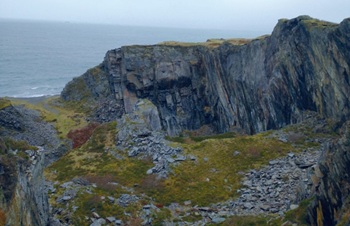
There are plenty of sources with the potential to be redeveloped.
Change of use legislation breaths new life into buildings

A run down on Class MA of the General Permitted Development Order.
Solar generation in the historic environment

Success requires understanding each site in detail.