





Drill pipe material selection for horizontal directional drills
Contents |
[edit] Introduction
Horizontal directional drilling is a method of achieving long-distance horizontal drilling underground, also known as "underground horizontal directional drilling", "inclined well drilling", etc. The technology can penetrate various formation types, buildings, pipelines and reach hard-to-invade areas. It introduces a vibrating drill bit to break rocks and soil with high-speed rotation and oscillation, and then discharges the fragments out of the hole. This vibrational behaviour guides the drill bit horizontally, allowing it to advance in a predetermined direction. Under the resistance of solid or liquid, the speed of oscillation drilling can reach several hundred meters per hour, which greatly increases the drilling speed and reduces the drilling cost. Therefore, horizontal directional drilling technology is a promising engineering technology.
[edit] Drill pipe material selection
Since horizontal directional drilling passes through various strata, the drill pipe faces relatively large pressure, friction and other factors, and needs to have high strength, good toughness, corrosion resistance and wear resistance. The following are several common drill pipe materials and their advantages and disadvantages.
[edit] High strength alloy steel
This is one of the most commonly used drill pipe materials. It has high strength and toughness and can withstand great tension and pressure. Moreover, this kind of steel has a long life and is not easy to rust and wear. However, the price of high-strength alloy steel is relatively high, which is not conducive to cost savings. Additionally, if it is not properly maintained, problems such as embrittlement and deterioration can occur.
[edit] Manganese steel
Manganese steel materials perform well in terms of corrosion resistance, wear resistance and toughness. Due to its relatively low strength, the structure needs to be strengthened during design to ensure its tension and compression. However, this type of steel is relatively cheap compared to other steel types. Note that manganese steel may deform during drilling.
[edit] Stainless steel
In horizontal drilling rig mud, stainless steel exhibits good corrosion resistance and can maintain the integrity of the drill pipe. However, the relatively low hardness of stainless steel makes it unsuitable for drilling operations that require use under strong vibration. Additionally, stainless steel has limited chemical resistance to corrosive slurries.
[edit] Titanium alloy
Titanium alloy materials have excellent performance in terms of oxidation resistance and corrosion resistance. Due to its low density and relatively light weight, it is ideal for horizontal drilling at greater depths. However, titanium alloys are more difficult to manufacture and more expensive.
[edit] Conclusion
Regarding the drill pipe materials of horizontal directional drills, different materials have different advantages and disadvantages. When selecting drill pipe materials, multiple factors such as formation conditions, drilling speed, usage environment and cost need to be taken into consideration. If you choose the right material, you can improve drilling efficiency, extend the service life of drill pipes, reduce equipment damage and maintenance costs, etc.
Featured articles and news
Costs and insolvencies mount for SMEs, despite growth
Construction sector under insolvency and wage bill pressure in part linked to National Insurance, says report.
The place for vitrified clay pipes in modern infrastructure
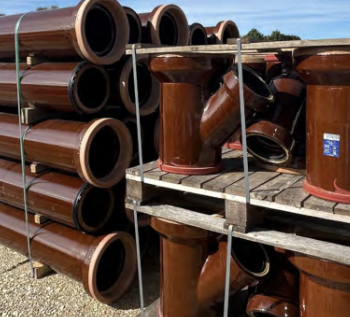
Why vitrified clay pipes are reclaiming their role in built projects.

Research by construction PR consultancy LMC published.
Roles and responsibilities of domestic clients

ACA Safety in Construction guide for domestic clients.
Fire door compliance in UK commercial buildings

Architect and manufacturer gives their low down.
Plumbing and heating for sustainability in new properties

Technical Engineer runs through changes in regulations, innovations in materials, and product systems.
Awareness of the Carbon Border Adjustment Mechanism
What CBAM is and what to do about it.
The new towns and strategic environmental assessments
12 locations of the New Towns Taskforce reduced to 7 within the new towns draft programme and open consultation.

Buildings that changed the future of architecture. Book review.
The Sustainability Pathfinder© Handbook
Built environment agency launches free Pathfinder© tool to help businesses progress sustainability strategies.

Government outcome to the late payment consultation, ECA reacts.
IHBC 2025 Gus Astley Student Award winners

Work on the role of hewing in UK historic conservation a win for Jack Parker of Oxford Brookes University.
Future Homes Building Standards and plug-in solar
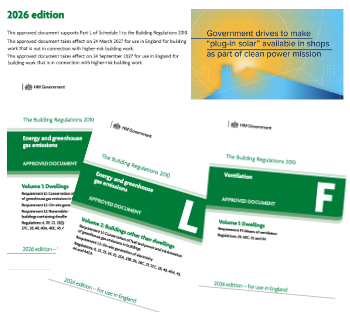
Parts F and L amendments, the availability of solar panels and industry responses.
How later living housing can help solve the housing crisis

Unlocking homes, unlocking lives.
Preparing safety case reports for HRBs under the BSA

A new practical guide to preparing structural inputs for safety cases and safety case reports published by IStructE.
Male construction workers and prostate cancer

CIOB and Prostate Cancer UK encourage awareness of prostate cancer risks, and what to do about it.