






Cycle storage
For the purposes of the Home Quality Mark, cycles may be stored in any of the following locked structures:
- Garages or sheds.
- Internal private spaces, such as dedicated spaces in a utility room.
- External or internal communal cycle stores.
- Proprietary systems.
Communal cycle storage should meet the following criteria:
- Spaces should be in racks that are covered overhead, and the racks should be fixed to a permanent structure (such as a building or hardstanding).
- Where the location is external to the home, access from the bike storage area to a pedestrian or cycle route is not permitted through the home.
The distance between each cycle rack and surrounding obstructions (e.g. walls) should allows for bikes to be easily stored and accessed.
Cycle racks must be a minimum of:
- 2m long × 0.75m wide for one bike.
- 2m long × 1.5m wide for two bikes.
- 2m long × 2.5m wide for four bikes.
- If hanging systems or proprietary systems are provided, the space requirements are flexible but the system must allow each cycle to be removed independently.
Cycle storage in communal locations should have adequate lighting that must be controlled during daylight hours.
Ref Home Quality Mark One, Technical Manual SD239, England, Scotland & Wales, published by BRE in 2018.
[edit] Related articles on Designing Buildings Wiki
- Are electric bikes the future?
- BRE articles.
- BREEAM Cyclist Facilities.
- BREEAM.
- Car sharing
- China has just built the world’s longest elevated cycle path.
- CIBSE Case Study Olympic Velodrome.
- Cycling and walking plan.
- Cycle route.
- Dedicated and safe cycle lane.
- Home Quality Mark.
- London car charging infrastructure.
- Sustainable transport.
Featured articles
Check out some of the best features and news from Designing Buildings as well as key stories from around the web.
New and updated CLC building safety guidance.
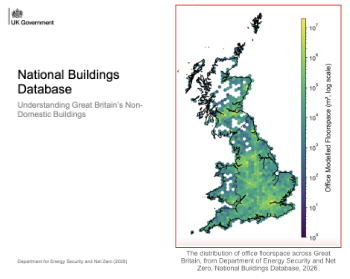
New UK National Buildings Database.
Building Safety Wiki Interviews

Chief executive of the British Woodworking Federation.
Planning condition discharge in England and Wales

A brief explanation from a building compliance expert, with further links.
Overheating guidance and tools for building designers

Guidance for dealing with element of building fabric control that have increasing importance.
Shading for housing, a design guide

From the Good Homes Alliance and British Blind and Shutter Association.
UK Standard Skills Classification (SSC)

A shared framework for describing skills needs.
Social media ban consultation comes to close

CIOB urges UK Government to consider social media’s role in careers guidance in ban debate.
The latest of eight Skills England apprenticeship units

The addition of battery manufacturing welcomed by ECA with a warning about the risks of fast-tracked apprenticeship units.
Building Control Independent Panel final report
A precis of a key report led by Dame Hackitt with full recommendations and link to the government response.
Building Safety recap April, 2026
A short and longer run-through of the month, with links to further information and sources.