





Counterclaim in construction
A counterclaim is a claim set up in opposition to another claim, that is, a claim by a party against a another party who has made a claim against them. This is not a defence to a claim, it is separate from it and proceeds even if the original claim is ended.
Counterclaims are often confused with abatement and set off.
Set off (or contra charging) is only permitted if a breach of contract by a party making a claim is so closely associated with the claim that it would not be just to consider the claim without also taking the breach into account (or where the claims are both for payment of readily ascertained debts).
Whilst set off is often accompanied by a counterclaim it is to be distinguished in that a counterclaim may be entirely different in nature to the claim, and set off, unlike a counterclaim, cannot give rise to a positive balance of claim whilst a counterclaim may exceed the amount of the initial claim.
Abatement argues that an amount claimed is incorrect because of defects in the work. If the defect is proved, then the valuation of the amount due may be reduced by the reduction in value of the works resulting from the defect.
Counterclaims can be used as tactics in legal cases, to confuse or delay proceedings, or to reduce awards. However, this has risks associated with it, and may simply result in higher costs.
Before the 2011 amendments to the Housing Grants Construction and Regeneration Act, set off and counterclaim were only permitted if a withholding notice was issued, whilst abatement did not require a withholding notice as the value of the works had been reduced and there was only an obligation to pay the amount properly due.
Since 2011 however, set off, counterclaim and abatement all require that a pay less notice is issued.
[edit] Related articles on Designing Buildings Wiki
- Abatement.
- Adjudication.
- Alternative dispute resolution.
- Housing Grants Construction and Regeneration Act.
- Set off.
[edit] External references
- A Straume (UK) Ltd v Bradlor Developments Ltd.
- Urang Commercial v Century Investments and Eclipse Hotels (Luton).
- Whyte and Mackay Ltd v Blyth & Blyth Consulting Engineers.
Featured articles and news
Building Control Independent Panel final report
A precis of a key report lead by Dame Hackitt with full recomendations and link to the government response.
Guide to ISO 19650 for Architecture Firms (2026)
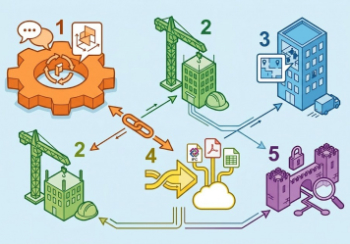
A user gives their low down.

A UK training and membership provider for mould remediation professionals.
Building Safety recap April, 2026
A short and longer run-through of the month, with links to further information and sources.
CIAT May 2026 briefing.

Independent NSI and BAFE study exploring how organisations are changing the way they buy fire safety services.

From medieval scribes to modern word art.

ECA welcomes crackdown on late payment and push for clean energy, whilst CIOB seek fixed cladding removal timeframes.
Cyber Security in the Built Environment
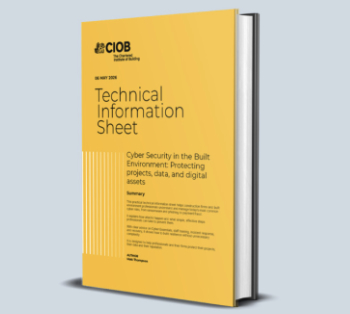
Protecting projects, data, and digital assets: A CIOB Academy TIS.
Managing competence in the built environment
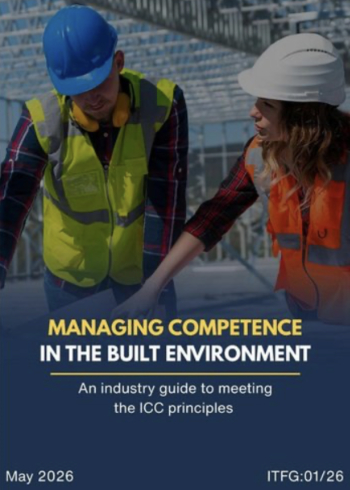
ITFG publishes new industry guide on how to meet the ICC principles.

The UK's campaign to reduce noise pollution: Mythbusting, articles and topic guides.
Setting Expectations on Competence Management
Industry Competence Committee.
New Scottish and Welsh governments

CIOB stresses importance of construction after new parliament elections.
The sad story of Derby Hippodrome
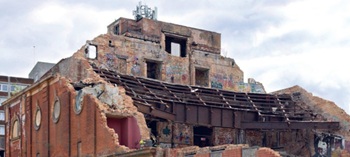
An historic building left to decay.

ECA, JIB and JTL back Fabian Society call to invest in skills for a stronger built environment workforce.