





Certificate of ownership
When a planning application is made for land that is not owned solely by the applicant, owners of the land to which the application relates must be informed.
Article 12 of the Town & Country Planning (Development Management) Procedure Order 2010 requires that planning applications are accompanied by a certificate confirming either that the applicant is the sole owner of all the land to which the application relates, or that notice has been served on all person(s) that are an owner of the land or a tenant.
Owners are people having a freehold interest or a leasehold interest the unexpired term of which is not less than seven years. This means that there can be more than one owner. In addition, the application may relate to more than one piece of land, so notice may have to be given to several people.
A written notice must be served on all owner(s) that the applicant knows the names and addresses of, telling them that the application is being made. Where the applicant has taken reasonable steps to ascertain the names and addresses of owner(s), but has been unable to do so, then an advert must be taken out in the local press.
The applicant must then confirm to the local authority that the owner(s) have been informed on a ‘certificate of ownership’ or ‘ownership certificate’(an article 12 certificate):
- If the applicant is the only owner of the land, certificate A is submitted.
- If the applicant is not the only owner, and the names and addresses of all the other owners are known, certificate B is submitted.
- If the applicant is not the only owner, but only the names and addresses of some of the other owners are known, certificate C is submitted.
- If the applicant is not the only owner, and they do not know the names and addresses of any of the other owners, certificate D is submitted.
Failure to follow this procedure may make a planning application invalid, or may even make a planning permission invalid. It is an offence to knowingly complete a certificate of ownership incorrectly.
[edit] Related articles on Designing Buildings Wiki
- Certificates in the construction industry.
- Conservation areas.
- Detailed planning application.
- How long does it take to get planning permission.
- Listed buildings.
- National Planning Policy Framework.
- National Planning Practice Guidance.
- Neighbourhood planning.
- Outline planning application.
- Permitted development.
- Planning appeal.
- Planning authority.
- Planning conditions.
- Planning enforcement.
- Planning fees.
- Planning objection.
- Planning obligations.
- Pre-application advice.
- Title.
Featured articles
Check out some of the best features and news from Designing Buildings as well as key stories from around the web.
Construction Management, 10 June

24 months to 14: CITB launches accelerated apprenticeships.
Bridging the gap between clients and contractors

Concerns remain around contractor quality, capability, and delivery.
Construction Management, 10 June.

Heat pumps beat boilers in new home tests.
Building Safety Act implementation in Wales

CIAT to host industry panel on 26 June.
New and updated CLC building safety guidance.
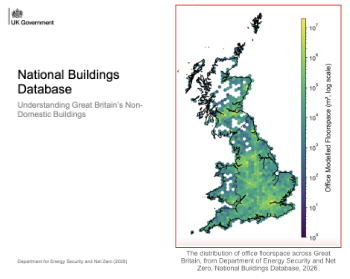
New UK National Buildings Database.
Building Safety Wiki Interviews

Chief executive of the British Woodworking Federation.
Planning condition discharge in England and Wales

A brief explanation from a building compliance expert, with further links.
Overheating guidance and tools for building designers

Guidance for dealing with element of building fabric control that have increasing importance.
Shading for housing, a design guide

From the Good Homes Alliance and British Blind and Shutter Association.
UK Standard Skills Classification (SSC)

A shared framework for describing skills needs.