





Cash flow statement
In very general terms, 'cash flow' is the movement of income into and expenditure out of a business (or other entity) over time. If more money is coming into the business than is going out of it, cash flow is said to be 'positive'. If more money is going out, this is negative cash flow.
In construction however, the term 'cash flow' typically refers to an analysis of when costs will be incurred and how much they will amount to during the life of a project.
A cash flow statement (or statement of cash flows), is a reporting mechanism used to show the amount of cash (and cash equivalents) going in (cash inflow) and out (cash outflow) of a business or project. In basic terms, the cash flow statement sets out the extent to which the business or project has enough cash to fund its operating expenses and meet its debt obligations.
In accounting, the cash flow statement is often used to complement the balance sheet and income statement, and is helpful for determining short-term viability. It also helps provide an indication of the amount and timing of future cash flows.
The cash flow statement is typically split into three areas:
- Cash flow from operating activities (production, sales, delivery, purchasing, shipping, and so on).
- Cash flow from investing activities (purchase or sale of assets, loans made or received, payments related to mergers and acquisition).
- Cash flow from financing activities (inflow from investors, outflow as dividends to shareholders, and so on).
Guidance is available from RICS about cash flow forecasting in the construction industry. http://www.rics.org/uk/knowledge/professional-guidance/black-book/cash-flow-forecasting-1st-edition-black-book/
NB The Chartered Institute of Procurement & Supply (CIPS) Glossary of procurement terms, defines cash flow as: ‘The amount of money moving in and out of a business in a particular period.’ It defines a cash flow statement as: ‘An accounting document that summarises the incomings and outgoings of cash in an organisation.’
[edit] Related articles on Designing Buildings Wiki
Featured articles and news

We're expanding our collaborative mission by launching DB Intelligence, an exclusive market research advisory panel. Built environment professionals can now get paid to share their expertise on industry trends, products and services.
Panel members receive direct financial incentives for participating in research projects like short surveys, 1-2-1 interviews and focus groups. Register today to shape the future of the construction sector.
Social media ban consultation comes to close

CIOB urges UK Government to consider social media’s role in careers guidance in ban debate.
The latest of eight Skills England apprenticeship units

The addition of battery manufacturing welcomed by ECA with a warning about the risks of fast-tracked apprenticeship units.
Building Control Independent Panel final report
A precis of a key report led by Dame Hackitt with full recommendations and link to the government response.
Guide to ISO 19650 for Architecture Firms (2026)
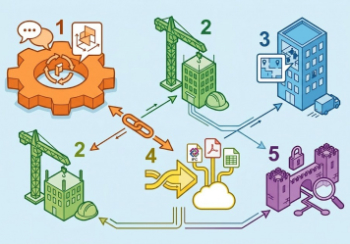
A user gives their low down.

A UK training and membership provider for mould remediation professionals.
Building Safety recap April, 2026
A short and longer run-through of the month, with links to further information and sources.

CIAT May 2026 briefing.

Independent NSI and BAFE study exploring how organisations are changing the way they buy fire safety services.

From medieval scribes to modern word art.

ECA welcomes crackdown on late payment and push for clean energy, whilst CIOB seek fixed cladding removal timeframes.
Cyber Security in the Built Environment
Protecting projects, data, and digital assets: A CIOB Academy TIS.
Managing competence in the built environment
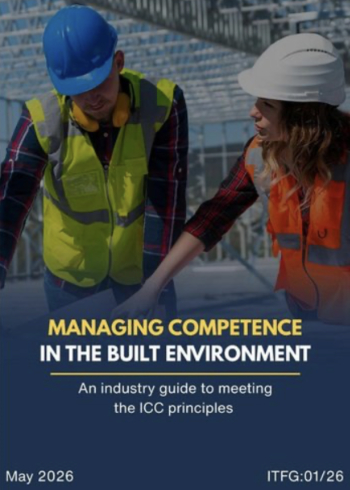
ITFG publishes new industry guide on how to meet the ICC principles.
The UK's campaign to reduce noise pollution: Mythbusting, articles and topic guides.