




CIAT shares IHBC research into LA conservation service capacity
Contents |
[edit] Introduction
CIAT has reported to its members and networks the IHBC’s research into current Local Authority (LA) conservation service capacity in England, which has declined by 50% in just over a decade, and suggests 6% of local authorities currently offer no services at all.
[edit] Report to CIAT members
CIAT writes:
Councils cut conservation services by half in a decade.
Local authority building conservation services have declined by 50% in just over a decade, with 6% of local authorities currently offering no services at all, research has revealed.
In October 2020, the Institute of Historic Building Conservation published research into specialist conservation provision in local authorities in England that revealed a 48.7% decline since 2009. The research was used to inform the briefing note on England’s planning white paper from the Conservation Places and People All-Party Parliamentary Group which took place on 4 November 2020.
The full CIAT coverage can be found here.

|
[edit] Reduction of services
IHBC Chair David McDonald said: "This survey demonstrates just how much local authority conservation services in England have been reduced over the last decade. Access to specialist advice decreasing by almost 50% since 2009 is a statistic that speaks for itself. If we add to that the loss of senior staff and the consequent wealth of knowledge and experience that is no longer available the overall picture is even worse.
"Of similar concern are those authorities that do not have access to any conservation advice. Not only are they failing in providing an adequate service, but also there must be an increased risk of Ombudsman complaints or Judicial Reviews."
Fiona Newton, IHBC's lead on this work since 2006, said: "Conservation advice is the critical frontline for protecting the historic environment, and once lost it can never be recovered. With 6% of local authorities now having no access to conservation advice and many others having just part time access to advice, this lack of advice exposes the nation's heritage to the real risk of harm."
IHBC director Seán O'Reilly said: "The loss of 48.7% of conservation provision across England since 2009 can only have had a devastating effect on local authorities, and some may be no longer even able to carry out even their statutory conservation duties. The reduced levels of conservation staffing in most local authorities mean that Listed Building owners and developers are often no longer able to get detailed proactive and practical support and advice from the local authority to help them to maintain and protect the heritage for which they are responsible."
This article originally appeared on the IHBC Newsblog under the headine, 'CIAT updates members on IHBC research into England’s LA Conservation Capacity: 50% fall in a decade, with 6% with none!'. It was written by Joanna Theobald and published on 26 November 2020.
--Institute of Historic Building Conservation
[edit] Related articles on Designing Buildings Wiki
- CIAT articles.
- Conservation of the historic environment.
- Conservation officer.
- Conservation practice survey 2016.
- IHBC articles.
- Impact of heritage sector local authority funding cuts in south west England.
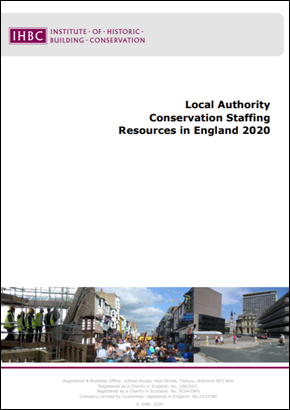
- Local Authority Conservation Staffing Resources in England 2020.
- The Institute of Historic Building Conservation.
[edit] External resources
IHBC NewsBlog
IHBC sponsors Gardens Trust event 23-4 Sept 2026
.jpeg)
'Learning from the Past, Shaping the Future’ takes place in Milton Keynes
Renovations to Frank Lloyd Wright's Fallingwater complete
.jpg)
World Heritage Preserved project opens house for tours again
Shakespeare Birthplace Trust places Hall's Croft on HAR Register
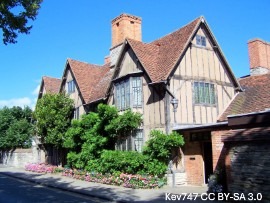
Stratford-upon-Avon home of Shakespeare's daughter is 'At Risk'
Lady Grange’s House repaired on St Kilda
.jpg)
National Trust for Scotland repairs stone cleit with link to famous island resident
Griff Rhys Jones on BBC Radio 4 Today programme
,_Green_Lane,_Derby.jpg)
The Victorian Society’s President unveiled its latest Top Ten Endangered Buildings 2026.
Need a MATE? Book your place now.
IHBC offers free webinars on applying for IHBC accreditation (Full & Associate).
UK Stained Glass Repository finds windows new homes
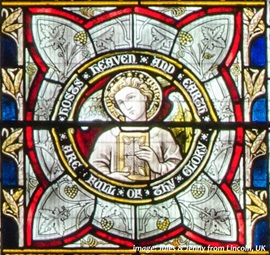
How are stained glass windows are rescued, stored and repurposed?
APPGEBE report sets high aims for quality
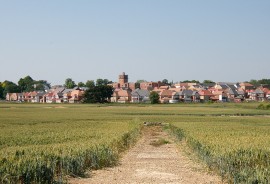
'Government must not sacrifice quality in drive to build 1.5m homes'
New measures protect Historic Shipwrecks from heritage crime

Underwater cultural heritage benefits from new HE guidance
How could the City of London skyline look in 6 years' time?

Visualisation shows approved planning applications as completed buildings
National Trust for Scotland calls for VAT cuts
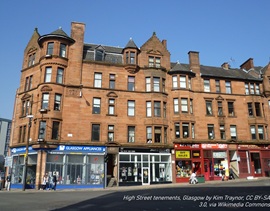
Heritage neglect is encouraged by current policies
IHBC's 'Context' Issue 186 features Industrial Heritage
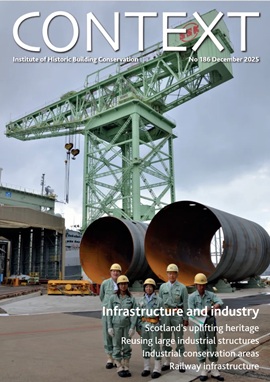
IHBC's members' journal reports on the challenges of conserving infrastructure
Book now for IHBC Annual School 2026

IHBC Annual School is taking place 18-20 June 2026 in Newcastle
RICHeS Research Infrastructure offers ‘Full Access Fund Call’
RICHeS offers a ‘Help’ webinar on 11 March
Latest IHBC Issue of Context features Roofing
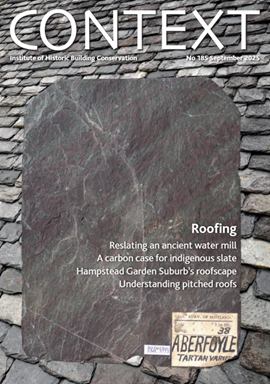
Articles range from slate to pitched roofs, and carbon impact to solar generation to roofscapes
Three reasons not to demolish Edinburgh’s Argyle House

Should 'Edinburgh's ugliest building' be saved?
IHBC’s 2025 Parliamentary Briefing...from Crafts in Crisis to Rubbish Retrofit
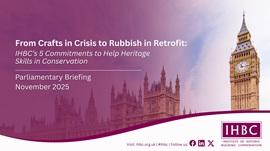
IHBC launches research-led ‘5 Commitments to Help Heritage Skills in Conservation’
How RDSAP 10.2 impacts EPC assessments in traditional buildings

Energy performance certificates (EPCs) tell us how energy efficient our buildings are, but the way these certificates are generated has changed.